
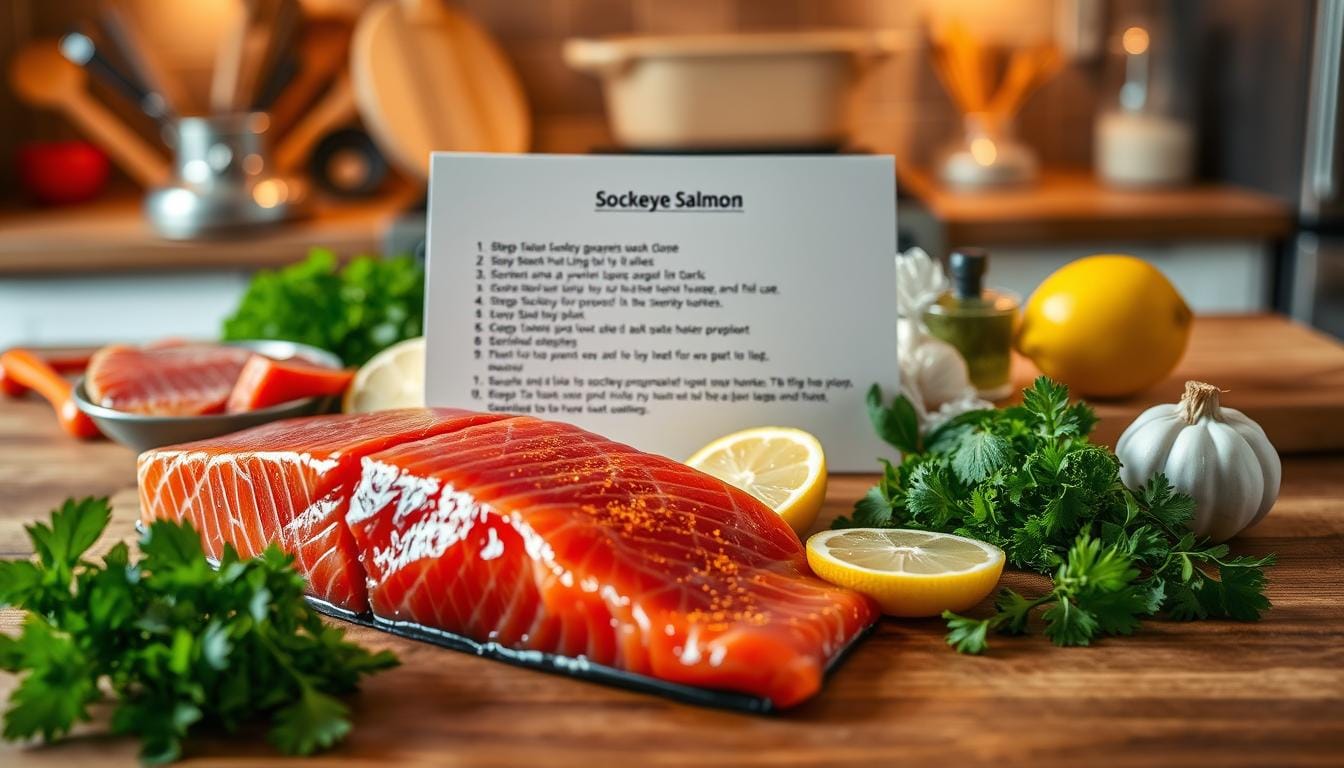
How to Cook Sockeye Salmon in 6 Easy Steps (Perfect Every Time)
Growing up near the Pacific Northwest, I learned early that cooking sockeye salmon is an art. The vibrant red fish is more than just food; it connects us to our coastal heritage. It reminds us of the pristine waters where these fish thrive.
Learning how to cook sockeye salmon can turn a simple dinner into a special meal. This guide will teach you everything you need to know about preparing this delicious fish. You’ll learn how to choose the best fillet and master cooking techniques that keep its rich flavors intact.
Sockeye salmon is a true culinary gem, known for its rich flavor, impressive health benefits, and sustainable sourcing. These qualities make it a favorite among chefs and home cooks who want to learn how to cook sockeye salmon perfectly while keeping it healthy and full of flavor.
By the end of this guide, you’ll know how to cook sockeye salmon with confidence. You’ll learn how to bring out its best qualities through different cooking methods. Get ready to improve your seafood cooking skills and enjoy nature’s delicious gift.
Once you’ve mastered how to cook sockeye salmon, try pairing it with creamy salmon pasta for a satisfying meal.
Table of Contents
What Makes Sockeye Salmon Special for Cooking
Sockeye salmon is a true culinary gem, known for its rich flavor, impressive health benefits, and sustainable sourcing. These qualities make it a favorite among chefs and home cooks who want to learn how to cook sockeye salmon perfectly while keeping it healthy and full of flavor.
Wild-Caught vs. Farmed Sockeye Salmon
Wild-caught and farmed salmon are worlds apart. If you’re learning how to cook sockeye salmon, choosing wild-caught sockeye is a top choice for your kitchen because of its superior flavor, firmer texture, and natural sourcing:
- Sourced exclusively from Northern Pacific waters
- Leaner and more flavorful than farmed varieties
- Supports sustainable fishing practices
Nutritional Benefits of Sockeye Salmon
Wild-caught sockeye salmon is a nutritional powerhouse. It offers:
| Nutrient | Benefit |
|---|---|
| Omega-3 Fatty Acids | Supports heart and brain health |
| Vitamin D | Boosts immune system |
| High-Quality Protein | Promotes muscle development |
Understanding Sockeye’s Rich Flavor Profile
Sockeye salmon’s unique taste is its greatest appeal. When you learn how to cook sockeye salmon properly, wild-caught fillets reveal a bold, rich flavor developed from a natural diet of krill and plankton. Its deep red-orange flesh and firm texture make it a favorite among food lovers who appreciate both taste and quality.
“Sockeye salmon is nature’s gourmet fish – bold, beautiful, and bursting with flavor.” – Seafood Expert
Selecting and Preparing Your Sockeye Salmon
Choosing the right wild-caught sockeye salmon is key to a tasty meal. When learning how to cook sockeye salmon, paying attention to quality signs while shopping helps ensure you bring home the best fish for rich flavor and great results.
High-quality wild-caught sockeye has:
- Bright, vibrant red-orange flesh
- Moist appearance without sliminess
- Fresh ocean smell
- Firm texture that springs back when pressed
- Intact skin for better cooking performance
Preparing wild-caught sockeye starts with handling it right. Here are the essential steps:
- Remove salmon from refrigerator 15-20 minutes before cooking
- Pat fish completely dry with clean paper towels
- Check for and remove pin bones using tweezers
- Cut larger fillets into evenly sized portions
Pro tip for wild-caught sockeye preparation: Keep the skin on during cooking. It protects the delicate flesh and makes flipping easier in the pan or on the grill.
| Salmon Selection Criteria | What to Look For |
|---|---|
| Color | Bright red-orange |
| Smell | Fresh ocean scent |
| Texture | Firm with slight give |
| Moisture | Moist but not slimy |
Never rinse your salmon before cooking. This can spread harmful bacteria. By following these guidelines, you’ll prepare your sockeye salmon perfectly for a delicious meal.
Essential Tools and Ingredients for Cooking Sockeye Salmon
Cooking the perfect sockeye salmon is about more than just starting with great fish. When learning how to cook sockeye salmon, having the right tools and ingredients makes a big difference. Choosing proper equipment and preparing flavorful marinades can elevate your cooking and turn a simple meal into something special.
Must-Have Kitchen Equipment
Here are the tools you need for salmon preparation:
- Cast-iron or stainless steel skillet for perfect searing
- Rimmed baking sheet with parchment paper
- Instant-read food thermometer
- Flexible fish spatula
- Sturdy tongs for grilling
Best Seasonings and Marinades for Sockeye
Discover amazing flavors with these sockeye salmon marinade ideas:
- Classic Herb Marinade: Olive oil, garlic powder, fresh dill, lemon zest
- Sweet and Tangy Glaze: Honey, Dijon mustard, rosemary
- Spicy Asian-Inspired: Soy sauce, ginger, sesame oil, green onions
When learning how to cook sockeye salmon, marinate it for 15–30 minutes to enhance flavor while preserving its natural taste. Keep the ingredients simple so the marinade complements the fish without overpowering it.
How to Cook Sockeye Salmon
Learning how to cook sockeye salmon becomes an enjoyable journey when you follow the right steps. The best recipes focus on preserving its rich flavor and firm texture for perfectly cooked results every time.
There are several ways to cook sockeye salmon. Each method brings out its amazing taste. Here are the most popular ones:
- Baking for even, gentle cooking
- Pan-searing for crispy exterior
- Grilling for smoky flavor
- Poaching for tender results
Wild sockeye salmon needs careful handling. It cooks quickly because it’s lean. So, timing is key to avoid drying it out.
Remember these cooking tips for sockeye salmon:
- Control cooking temperature carefully
- Monitor cooking time based on fillet thickness
- Remove from heat just before fully cooked
- Allow for carryover cooking during resting
Pro tip: When learning how to cook sockeye salmon, remember that each cooking method offers unique advantages—experiment to discover your favorite technique for preparing this delicious fish.
Baking Sockeye Salmon in the Oven
Baking sockeye salmon is a simple and delicious way to enjoy its rich flavor and delicate texture. The key to perfect baked sockeye salmon is knowing the right temperature and technique. This keeps the fish moist and flavorful.
When learning how to cook sockeye salmon in the oven, paying attention to detail and following a few essential steps is key. The goal is to achieve a tender, flaky, and flavorful piece of fish every time.
Optimal Temperature and Timing for Salmon Cooking
When learning how to cook sockeye salmon in the oven, cooking temperature is crucial for achieving perfect results. Here are the recommended temperature guidelines to keep the fish tender, flaky, and full of flavor:
- Preheat your oven to 400°F for faster cooking
- Alternatively, use 375°F for gentler cooking
- Follow the 10-minute rule: Cook approximately 10 minutes per inch of thickness
If you need a quick and delicious idea, this simple salmon pasta recipe uses perfectly cooked salmon for a fast weeknight dinner.
Preventing Dry and Overcooked Fish
Sockeye salmon is leaner than other salmon varieties, making it more prone to drying out. To prevent this, try these professional techniques:
- Brush the salmon with olive oil or melted butter
- Check doneness early, starting at the 10-minute mark
- Remove from oven when internal temperature reaches 120-125°F
- Let the fish rest to allow carry-over cooking
| Cooking Method | Temperature | Cooking Time |
|---|---|---|
| Oven Baking | 375-400°F | 12-15 minutes |
| Foil Tenting | 375°F | 15-18 minutes |
Pro tip: When learning how to cook sockeye salmon, watch for white albumin forming on the surface, as it’s a sign of overcooking. Aim to remove the fish just before it turns fully opaque to keep the texture moist, tender, and succulent.
Pan-Searing Sockeye Salmon to Perfection
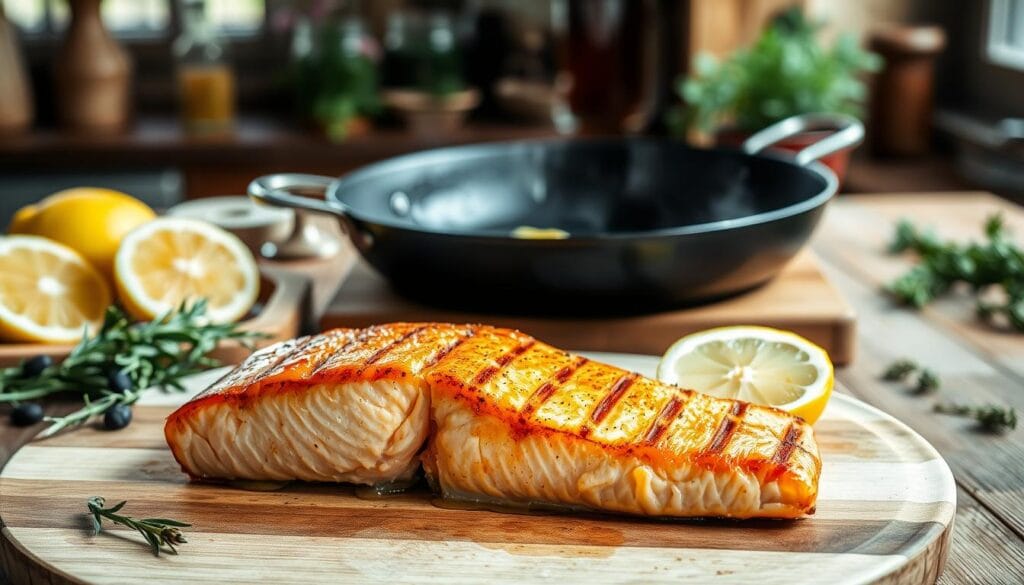
Pan-searing sockeye salmon is an art that turns a simple fish into a dish fit for a restaurant. The secret to a crispy outside and a tender inside is mastering a few key techniques.
Before you start cooking your pan-seared sockeye salmon, get these ingredients ready:
- Fresh sockeye salmon fillet
- High smoke-point oil (avocado or grapeseed)
- Salt and freshly ground black pepper
- Optional seasonings: smoked paprika, garlic powder
The perfect pan-seared sockeye salmon needs careful preparation:
- Pat the salmon dry with paper towels
- Season generously with salt and pepper
- Heat a cast-iron or stainless steel skillet over medium-high heat
- Add a thin layer of high smoke-point oil
Cooking technique is key for pan-seared sockeye salmon. Place the fillet skin-side down, gently pressing with a spatula for the first 20 seconds. This prevents skin curling and ensures even contact with the hot pan.
| Cooking Stage | Time | Temperature |
|---|---|---|
| Skin-side cooking | 5-6 minutes | Medium-high heat |
| Flesh-side cooking | 1-2 minutes | Reduced heat |
Pro tip: When learning how to cook sockeye salmon, avoid moving the fillet while it cooks. Let it sit undisturbed so a beautiful golden crust can form, resulting in crispy skin and a juicy, tender interior.
Grilling Sockeye Salmon for Maximum Flavor
Grilling sockeye salmon turns this tasty fish into a smoky, flavorful dish. The right grilling technique can make your salmon go from good to great. It’s a meal that will wow even the pickiest seafood fans.
To master grilling sockeye salmon, you need to know two main heat methods. These methods can greatly change how your dish tastes:
Direct vs. Indirect Heat Strategies
- Direct Heat Method: Great for thinner fillets under 1 inch thick
- Indirect Heat Method: Best for thicker cuts and controlled cooking
The direct heat method gives you beautiful grill marks and quick char. It works well for thinner fillets, taking 3-4 minutes per side over medium-high heat. For thicker fillets, indirect heat is better. It helps cook more evenly and prevents overcooking.
Achieving Crispy Skin on the Grill
To get crispy salmon skin, you need to prepare it right:
- Pat the salmon skin dry
- Oil the skin, not the grill grates
- Preheat grates and clean with a brush
- Place salmon skin-side down first
- Let it cook for 4-5 minutes without moving for the best crisp
Pro tip: Try using a cedar plank or cast-iron skillet on the grill for extra flavor. The crispy skin not only tastes amazing but also keeps the salmon inside moist and tender.
Poaching Sockeye Salmon for Delicate Texture
Poaching sockeye salmon is a gentle way to cook it. It keeps the fish’s flavor and texture intact. This method makes the salmon tender, ideal for a light, healthy meal.
Poaching is an excellent method when learning how to cook sockeye salmon, as it highlights the fish’s natural flavor without adding extra fat. Gently cooking it in a flavorful liquid just below boiling keeps the texture silky, moist, and perfectly tender.
Essential Poaching Ingredients
- Fresh sockeye salmon fillet
- White wine or water
- Lemon slices
- Fresh herbs (dill or parsley)
- Garlic cloves
Poaching Step-by-Step
- Prepare a liquid base with water, white wine, and aromatics
- Bring mixture to a gentle simmer
- Carefully slide salmon into the liquid
- Cook for 8-10 minutes
- Check for opaque, flaky texture
Pro tip: Keep the poaching liquid just below boiling to prevent the salmon from becoming tough. The key to perfect poached sockeye salmon is maintaining a gentle heat that cooks the fish evenly.
“Poaching transforms sockeye salmon into a melt-in-your-mouth delicacy that celebrates the fish’s natural flavors.” – Professional Chef
When poaching sockeye salmon, patience and temperature control are key. The result is a tender, flavorful fish. It’s perfect for salads, elegant dinners, or meal prep.
Checking Doneness and Internal Temperature
Cooking sockeye salmon right means watching for doneness and the right temperature. Knowing how to check your fish ensures a tasty, safe, and moist meal every time.
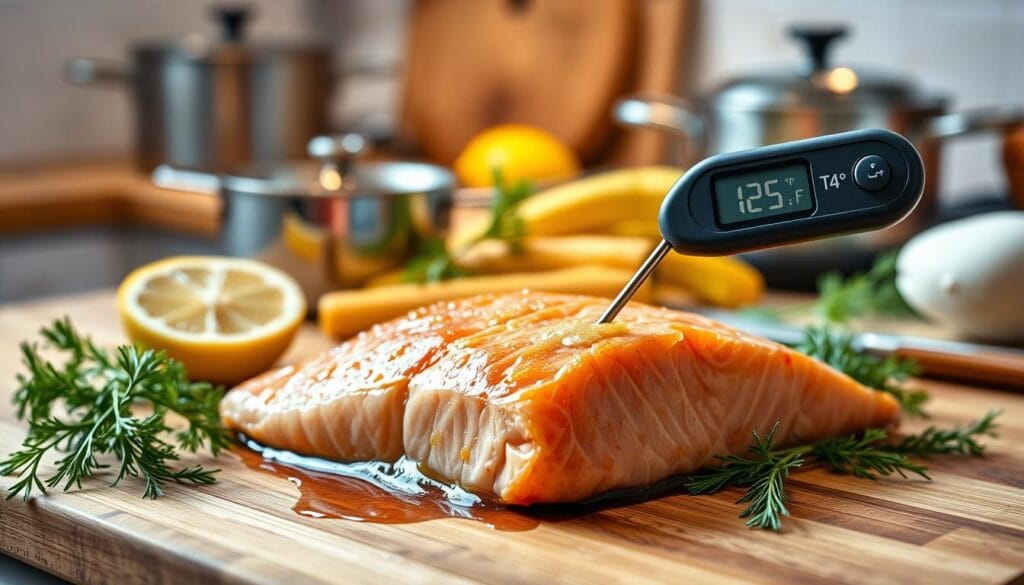
Getting the perfect salmon cooking temperature is not just a guess. Professional chefs use several methods to know when salmon is just right.
Visual Cues for Perfectly Cooked Salmon
The look of your salmon can tell you how it’s cooked. Here are the main signs:
- Color transformation from deep red-orange to lighter pink
- Flesh changing from glossy to matte and opaque
- Slight translucency in the center of the fillet
- Ability to flake gently with a fork
Using a Food Thermometer Correctly
A food thermometer gives the most accurate salmon cooking temperature reading. Here’s how to use it right:
- Insert thermometer into the thickest part of the fillet
- Angle probe horizontally through the center of the flesh
- Avoid touching the cooking surface
- Wait for temperature to stabilize
| Salmon Cooking Temperature | Doneness Level | Recommended Action |
|---|---|---|
| 120-125°F | Medium-rare | Remove from heat, let rest |
| 125-130°F | Medium | Ideal for most preferences |
| 145°F | Well-done | USDA food safety recommendation |
Pro tip: Remember that salmon continues cooking after removal from heat, so pull it slightly early to prevent overcooking.
Common Mistakes to Avoid When Cooking Sockeye Salmon
Learning how to cook sockeye salmon is key. You must avoid mistakes that can ruin your dish. Knowing these common errors will help you cook perfect salmon every time.
Here are the mistakes to watch out for:
- Overcooking: Sockeye salmon is lean and dries out fast. Keep an eye on the cooking time and take it off heat when it’s almost done.
- Cooking from cold: Let your salmon sit at room temperature for 15-20 minutes before cooking. This ensures even cooking.
- Rinsing raw salmon: Rinsing spreads bacteria and doesn’t clean the fish. Just pat it dry with paper towels.
Temperature and technique are vital. Use medium to medium-high heat to cook the salmon right. Don’t flip or move the fish too much during cooking.
- Keep the skin on: The skin protects the fish and stops it from sticking.
- Season well: Sockeye salmon tastes great on its own, but seasoning makes it even better.
- Watch for carryover cooking: Take the salmon off heat a few degrees before your target. This prevents it from getting overcooked.
Avoiding these mistakes will make your sockeye salmon amazing. You’ll impress everyone with your cooking skills.
Serving Suggestions and Side Dish Pairings
Improving your sockeye salmon recipes is more than just cooking. The right side dishes and accompaniments can make your meal unforgettable. Choose flavors and textures that complement the salmon for a memorable dining experience.
The rich flavor of sockeye salmon needs careful pairing. Aim for balanced meals that showcase the fish’s taste while offering nutritional value.
Complementary Vegetables
Fresh vegetables can really elevate your meals when learning how to cook sockeye salmon. Here are some great options that pair perfectly with its rich flavor:
- Roasted asparagus with lemon and garlic
- Sautéed green beans with toasted almonds
- Grilled zucchini with herbed seasoning
- Steamed broccoli drizzled with olive oil
- Mixed green salad with light vinaigrette
Grain and Starch Companions
The right grain or starch can complete your meal:
- Fluffy jasmine rice
- Herbed quinoa
- Creamy mashed potatoes
- Roasted fingerling potatoes
- Wild rice pilaf
Sauce and Topping Ideas
Enhance your sockeye salmon with these sauces and toppings:
- Lemon-dill sauce with Greek yogurt
- Fresh herb gremolata
- Mango salsa for sweet-spicy contrast
- Chimichurri for herbaceous kick
- Simple brown butter with capers
When you thoughtfully balance flavors and textures while learning how to cook sockeye salmon, your dishes become truly impressive. Try these ideas to create restaurant-quality meals right at home.
Storing and Reheating Leftover Sockeye Salmon
Keeping your sockeye salmon tasty and fresh is key. You need to store and reheat it right. This way, you can enjoy your leftover fish safely and with great flavor.
- Cool salmon to room temperature within 2 hours of cooking
- Store in an airtight container or wrap tightly in aluminum foil
- Refrigerate in the coldest part of your fridge
- Consume within 3-4 days for optimal taste and safety
Freezing is an excellent option for longer-term storage. When learning how to cook sockeye salmon, it’s helpful to know that wrapping individual portions in plastic wrap, sealing them in a freezer bag, and removing excess air helps preserve quality. Properly frozen salmon stays good for up to 2–3 months.
When reheating, be gentle to keep your salmon moist:
- Oven method: Warm at 275°F, covered with foil and a tablespoon of water
- Stovetop technique: Use low heat with a bit of butter or oil
- Microwave sparingly: Use 50% power in short intervals
Pro tip: Cold salmon can be surprisingly delicious. When you learn how to cook sockeye salmon properly, leftovers work great in salads, on bagels, or formed into salmon cakes. If reheating from frozen, thaw it overnight in the fridge for the best texture and flavor.
For more ideas combining salmon with pasta, check out these salmon and pasta recipes that offer a variety of savory options.
Conclusion
Learning to cook sockeye salmon can change your cooking at home. Wild-caught Alaskan sockeye has a rich, delicious taste that needs little prep. You can bake, pan-sear, grill, or poach it, but always respect its delicate texture.
Each method highlights different qualities of sockeye salmon. Pan-searing gives a crispy outside and a soft inside. Grilling adds a smoky flavor. Baking is great for home cooks who want reliable results.
The key to mastering how to cook sockeye salmon is starting with high-quality fish and following the right steps. Simple seasonings like salt, pepper, and fresh herbs enhance the natural flavor without overpowering it. This guide will help you cook sockeye salmon like a pro right at home.
Practice is key to mastering how to cook sockeye salmon. Feel free to experiment with different cooking methods and seasonings—over time, you’ll build confidence, improve your technique, and create unforgettable meals with this amazing fish.