
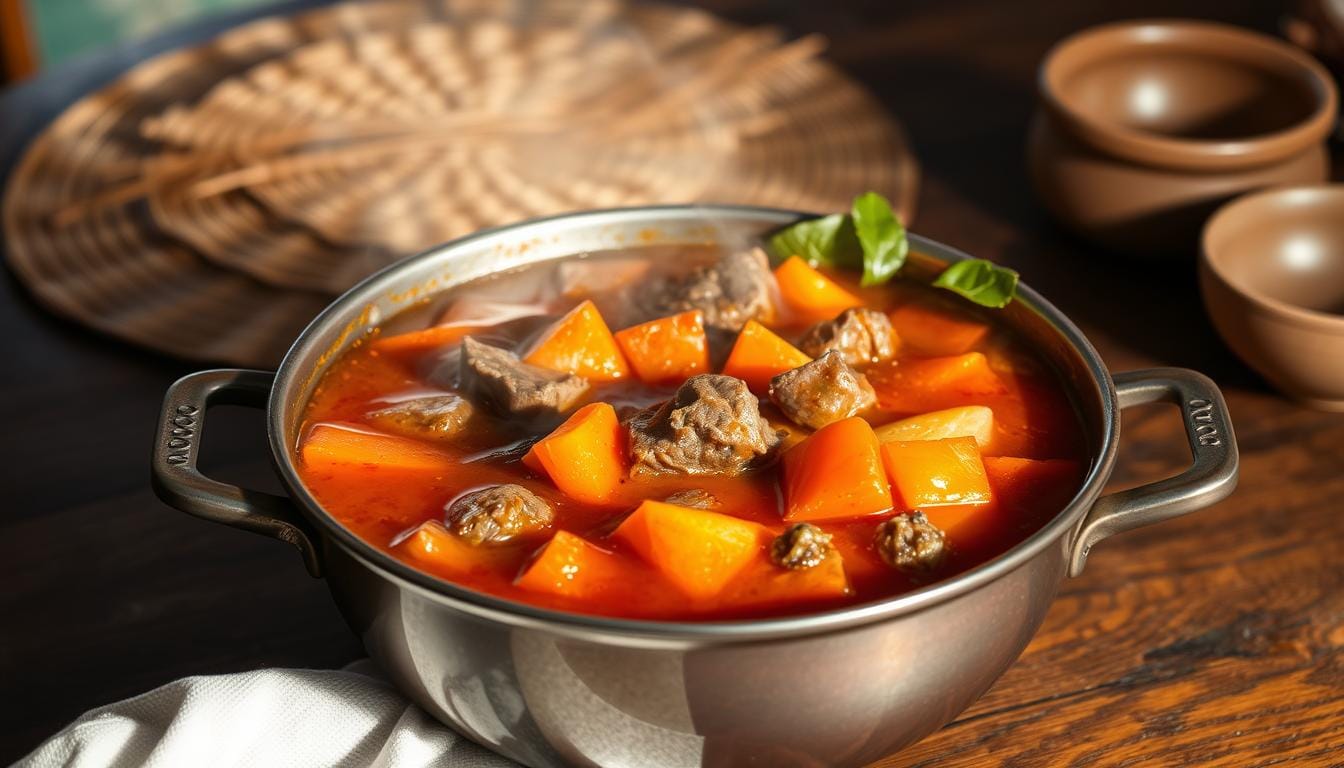
How to Make Filipino Beef Caldereta – An Easy, Authentic 5-Step Recipe for a Flavorful Stew
When the smell of caldereta fills my kitchen, I’m taken back to family gatherings. Laughter filled the air, and this Filipino dish brought everyone together. Caldereta is more than a meal; it’s a celebration of flavor, tradition, and connection.
Imagine a dish that turns simple ingredients into something extraordinary. Caldereta is a mix of tender meat, colorful vegetables, and a sauce that shares stories of the past. It’s not just a stew; it’s a symphony of flavors.
Whether you’re an experienced cook or just starting out, this caldereta recipe will help you make a true Filipino dish. It promises to warm your heart and fill your belly. Get ready to explore the rich flavors of the Philippines in your own kitchen.
Caldereta has been a favorite in Filipino cuisine for years. It’s perfect for family reunions or cozy dinners. Let’s learn how to make this amazing dish that has won the hearts of food lovers everywhere.
Table of Contents
Understanding the Rich Heritage of Filipino Caldereta
The traditional caldereta is a journey through Filipino cuisine. It’s deeply rooted in cultural traditions and regional flavors. This beloved Filipino goat stew shows the rich history of the Philippines.
Filipino cuisine tells stories through its dishes. Caldereta is a prime example of this. It started as a hearty Filipino goat stew. Over generations, it has changed, adapting to local tastes and ingredients.
Origins and Cultural Significance
Caldereta came from the Spanish colonial period. It mixed European cooking with local Filipino ingredients. The name comes from the Spanish caldera, meaning cauldron or cooking pot.
- Originated during Spanish colonial era
- Reflects cultural fusion and culinary creativity
- Symbolizes Filipino adaptability in cooking
Evolution from Goat to Various Meat Options
Traditional caldereta started with goat stew. Now, it includes many protein choices. Families and chefs use:
| Meat Type | Popularity | Flavor Profile |
|---|---|---|
| Goat | Traditional | Rich, Intense |
| Beef | Very Common | Hearty, Robust |
| Chicken | Modern Adaptation | Lighter, Subtle |
Regional Variations Across the Philippines
Different regions have their own caldereta. They use local ingredients and cooking styles. From coastal areas to mountain provinces, each adds its own twist to this beloved dish.
- Luzon: Spicier versions with more peppers
- Visayas: Coconut milk-infused preparations
- Mindanao: Incorporating local herbs and spices
If you want to try a slightly different version of this dish, check out this traditional kaldereta recipe with rich, authentic flavors.
Essential Ingredients for Authentic Caldereta Recipe
Making a real caldereta needs the right mix of ingredients. This mix turns a simple tomato stew into a rich Filipino dish. Knowing the key parts helps you make a meal that truly feels like traditional Filipino cooking.
The core of any caldereta recipe is its ingredients. They give the dish a deep, complex taste. Your choice of main protein is key in shaping the dish’s flavor.
- Meat Options:
- Beef (most traditional)
- Goat
- Chicken
A true tomato-based stew needs special ingredients to stand out. Liver spread adds a unique depth, while cheese makes it creamy. These elements make caldereta different from other stews.
| Ingredient Category | Specific Items | Culinary Purpose |
|---|---|---|
| Proteins | Beef, Goat, Chicken | Primary flavor foundation |
| Sauce Base | Tomato sauce, Liver spread | Create rich, deep flavor |
| Vegetables | Potatoes, Carrots, Bell peppers | Add texture and nutrition |
| Finishing Touch | Cheese | Enhance creaminess |
Your choice of ingredients affects the taste and authenticity of your caldereta. Using top-quality, fresh ingredients makes your meal unforgettable. It shows respect for Filipino culinary traditions.
Preparing and Cleaning Your Meat for Perfect Results
Making a tasty beef caldereta begins with picking the right meat. The quality of your ingredients affects the dish’s flavor and texture. It’s important to prepare the meat well to make a standout caldereta.
The key to a great beef caldereta is choosing the right meat and preparing it carefully. Look for cuts that are tender and full of flavor, perfect for slow cooking.
Selecting the Best Beef Cuts
- Chuck roast: Provides rich flavor and becomes tender with slow cooking
- Beef brisket: Offers excellent marbling for a succulent beef caldereta
- Short ribs: Adds depth and richness to the stew
Effective Marination Techniques
Marinating turns regular beef into a delicious caldereta. Your marinade should boost the meat’s flavor and make it tender.
- Combine soy sauce, calamansi juice, and garlic
- Marinate beef for 15-30 minutes before cooking
- Pat meat dry before browning to ensure perfect caramelization
Cleaning and Trimming Tips
Cleaning and trimming the beef are key steps for caldereta. Remove extra fat and make sure the meat is clean for the best flavor and texture.
- Rinse beef under cold water
- Trim visible fat, leaving some for flavor
- Cut meat into uniform 1-inch cubes for even cooking
By using these preparation tips, you’ll get better at making beef caldereta. You’ll create a dish that’s both authentic and tasty.
For more hearty Filipino and beef dinner ideas, make sure to explore our easy ground beef recipes collection.
Mastering the Art of Vegetable Preparation
Preparing vegetables is key to making a great caldereta recipe. The right way to prepare them makes your dish taste amazing and feel just right in your mouth.
Here are the important steps to follow when preparing vegetables for your caldereta:
- Potatoes: Cut into uniform 1-inch cubes to ensure even cooking
- Carrots: Slice diagonally into bite-sized pieces for visual appeal
- Bell peppers: Remove seeds and slice into colorful strips
- Onions: Chop finely to distribute flavor throughout the stew
Each vegetable has its own role in your caldereta. Uniform cutting prevents some pieces from becoming mushy while others remain undercooked. Spend time on each ingredient. This care makes your dish stand out.
For those who love Filipino cuisine, remember the cooking time of each vegetable. Cut harder veggies like carrots and potatoes a bit bigger. This way, they cook at the same time as softer veggies.
“In Filipino cooking, vegetable preparation is an art form that transforms simple ingredients into a memorable meal.”
Step-by-Step Cooking Process
Making a tasty caldereta needs focus and timing. It’s about mastering key steps to turn simple ingredients into a rich Filipino stew.
Your cooking journey starts with preparing the main parts of caldereta sauce. Each step is vital for building the dish’s unforgettable flavors.
Initial Meat Browning Technique
Browning meat is the base of a great caldereta. Here’s how to do it right:
- Choose top-quality beef or goat meat
- Pat meat dry with paper towels
- Season well with salt and pepper
- Use a heavy-bottomed pan for even heat
- Sear meat until it’s golden brown on all sides
Creating the Robust Base Sauce
Preparing the caldereta sauce is key for its rich taste:
- Sauté garlic and onions until they’re soft
- Add tomato sauce and liver spread
- Put in beef broth for more depth
- Simmer until the sauce thickens a bit
Vegetable Integration
Adding vegetables at the right time is important. Add potatoes and carrots in the last 30 minutes to avoid overcooking.
| Vegetable | Cooking Time | Preparation |
|---|---|---|
| Potatoes | 30 minutes | Cut into chunks |
| Carrots | 25-30 minutes | Slice diagonally |
| Bell Peppers | 15-20 minutes | Dice into small pieces |
Pro tip: Let your caldereta simmer slowly. This helps develop deep, complex flavors for an authentic taste.
Secret Ingredients That Elevate Your Caldereta
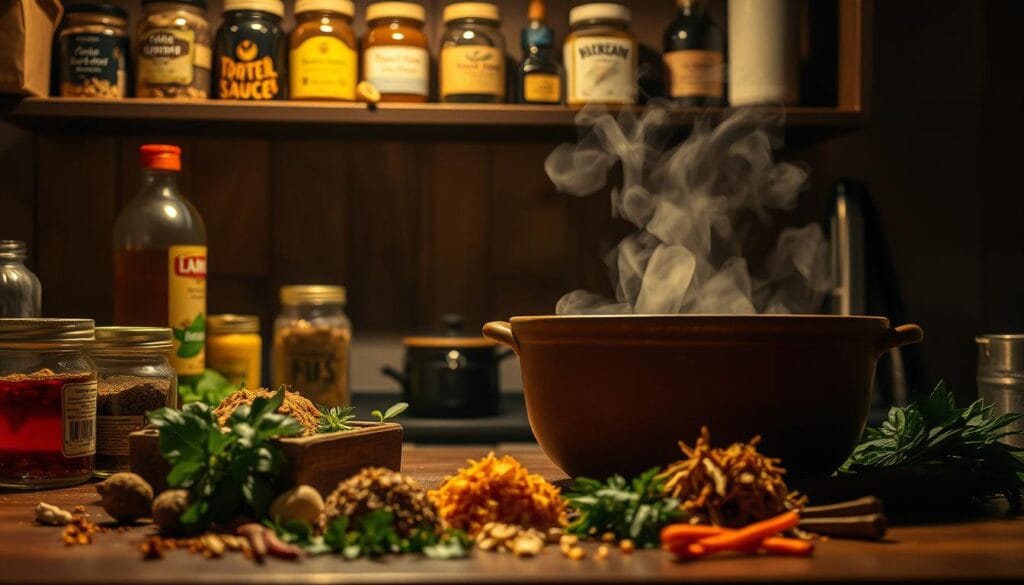
To make your caldereta truly special, you need special ingredients. These add depth and complexity to the dish. Knowing which unique additions can greatly improve your stew’s flavor is key.
Professional Filipino chefs use secret ingredients to make their spicy caldereta stand out. These special additions can turn a simple stew into a memorable meal that excites your taste buds.
- Liver Spread: This rich, intense ingredient adds a deep umami flavor that elevates the entire dish’s complexity
- Cheese: Grated cheese provides a creamy texture and subtle richness to the sauce
- Chili Peppers: Fresh or dried chilies can transform your caldereta into a truly spicy caldereta
When adding these secret ingredients, start with small amounts and adjust to your taste. The goal is to enhance the stew’s flavor without overpowering the main ingredients.
For an extra kick, try different types of chili peppers. Local varieties like siling labuyo can add authentic Filipino heat to your caldereta. This makes for a truly memorable dining experience.
Traditional Slow-Cooking Methods vs Modern Alternatives
Making the perfect traditional caldereta is all about mastering cooking techniques. The method you pick can change the taste, texture, and quality of your dish. It’s key when learning how to make caldereta.
Cooking caldereta has changed from old slow-cooking ways to new methods. Each way has its own benefits for those wanting true Filipino tastes.
Benefits of Slow Cooking
Slow cooking makes tough meat soft and delicious. The traditional caldereta method involves:
- Low, consistent heat development
- Enhanced flavor infusion
- Meat becoming exceptionally tender
- Deep flavor penetration
Temperature and Timing Guidelines
Learning to make caldereta means knowing about temperature control. The best slow-cooking settings are:
- Low heat: 200-250°F
- Cooking duration: 2-4 hours
- Occasional liquid monitoring
- Gentle stirring to prevent burning
Modern Cooking Adaptations
New kitchen tools bring exciting ways to make traditional caldereta:
- Pressure Cookers: Cut cooking time by 50-70%
- Slow Cookers: Easy, hands-off cooking
- Multi-Cookers: Set and forget for consistent results
No matter the method, keeping the true flavor of caldereta is the goal. It’s what makes it a favorite in Filipino cooking.
Perfect Pairings and Serving Suggestions

Your caldereta recipe needs the right side dish for a true Filipino meal. Steamed white rice is the classic choice. It’s a neutral base that soaks up the rich sauce of your dish.
Here are some dishes that can make your caldereta meal complete:
- Traditional Filipino pancit (stir-fried noodles)
- Crispy lumpia (spring rolls)
- Pickled vegetable sides like atchara
- Fresh green salad with vinegar-based dressing
How you present your dish is important in Filipino cuisine. Use a deep ceramic dish to show off the colors and textures of your caldereta. Add fresh parsley or cilantro on top for a pop of color.
For a real Filipino touch, choose serving plates that reflect our traditions. Wooden platters or clay dishes can make your meal look and feel more authentic.
To enhance the richness of your caldereta, you can even serve it with homemade beef gravy for a deeper flavor.
Conclusion
Learning to make caldereta is more than just a recipe. It’s about connecting with a rich cultural tradition. This tradition brings families and friends together for a warm, hearty meal.
Your journey into this classic Filipino dish is a delicious exploration. It’s about flavor, technique, and heritage.
As you try different meats and regional variations, remember each version has its own story. Whether you use goat, beef, or chicken, the key is to keep the traditional spirit alive. Make the recipe your own.
Invite your loved ones to share in this culinary experience. Create lasting memories around the dining table.
The Filipino goat stew is versatile and full of flavor. With practice, you’ll master the skills to turn simple ingredients into a spectacular dish. This dish honors generations of Filipino cooking traditions.
Keep exploring, tasting, and sharing your caldereta recipe with passion and pride. Your culinary journey doesn’t end here.
Continue to learn, adapt, and celebrate the rich flavors of Filipino cuisine. Each time you prepare caldereta, you’re not just cooking a meal. You’re preserving and sharing a piece of cultural history.
FAQ
What is caldereta and where does it originate?
What are the key ingredients in an authentic caldereta recipe?
How spicy is traditional caldereta?
Can I make caldereta with different types of meat?
What is the purpose of liver spread in caldereta?
How long does it take to cook caldereta?
What is the best way to serve caldereta?
Can I make caldereta in advance?
Have You Tried Our Recipe Today?
i like it
i like it very weel