
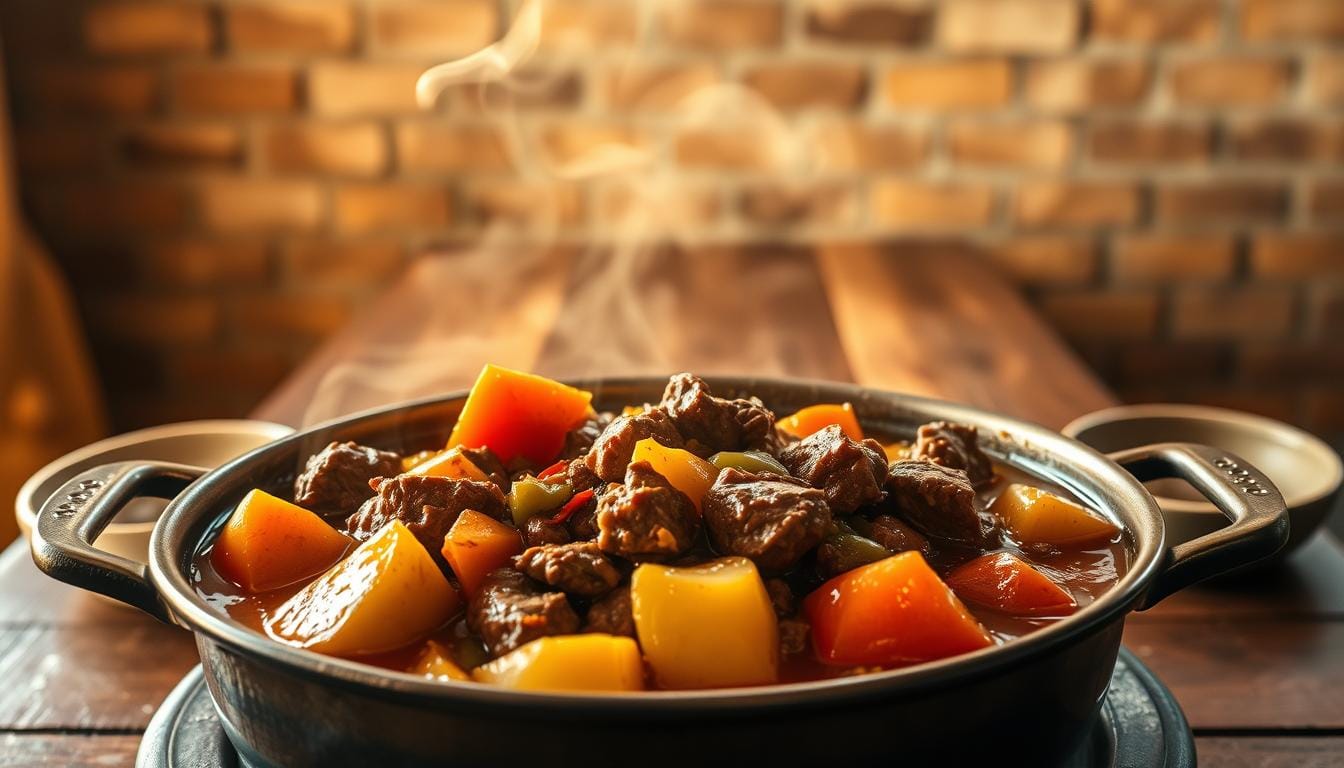
The Best Filipino Kaldereta Recipe – Easy, Authentic Step-by-Step Instructions for a Rich Beef Stew
Growing up in a Filipino household, the smell of kaldereta on the stove was always exciting. It meant something special was coming. This dish is more than just food—it’s a story of family, connection, and tradition that brings everyone together.
Starting your kaldereta journey here is a great idea. Whether you’re an experienced cook or new to Filipino food, this guide will help you. You’ll learn how to make a dish that’s full of flavor and captures the essence of Filipino cooking.
Kaldereta is a versatile dish that’s perfect for any occasion. It’s great for a family dinner or a weekend party. Follow our step-by-step guide to make a dish that’s both delicious and meaningful.
If you want to compare different styles of this classic dish, be sure to check out this traditional caldereta recipe as well.
Table of Contents
Understanding the Rich Heritage of Filipino Kaldereta
Explore the world of authentic kaldereta, a favorite Filipino dish. It’s a story of cultural mix and creative cooking. This dish is more than food; it’s a symbol of the Philippines’ rich food history.
Origins of a Culinary Treasure
Kaldereta’s roots go back to the Spanish colonial era. During this time, Spanish cooking styles mixed with Filipino ingredients. The name caldera (cauldron) shows how Filipino cooks made a unique dish from foreign influences.
- Spanish colonial influence brought new cooking methods
- Local ingredients were creatively incorporated
- The dish evolved into a true Filipino comfort food
Regional Flavors Across the Philippines
Every region in the Philippines has its own kaldereta twist. From Bicol’s spicy versions to Luzon’s milder ones, it shows the country’s varied food scene.
Traditional Methods Meet Modern Innovation
Traditional kaldereta recipes are still loved, but modern chefs are putting their own spin on it. They use new meats, spices, and cooking methods. These changes keep the dish fresh while staying true to its roots.
Kaldereta is more than a dish – it’s a celebration of Filipino culinary heritage.
Essential Ingredients for Authentic Kaldereta Recipe
Making a real kaldereta recipe needs the right mix of ingredients. These ingredients add depth, richness, and that special Filipino taste. The secret to kaldereta is how all these parts come together to make something amazing.
- Protein Base:
- Beef (preferably tender cuts)
- Goat meat (traditional alternative)
- Flavor Enhancers:
- Liver spread kaldereta (crucial for umami depth)
- Tomato sauce
- Beef broth
- Vegetable Components:
- Bell peppers
- Potatoes
- Carrots
- Green olives
“The secret to an exceptional kaldereta recipe is in the liver spread – it’s the hidden gem that transforms a good dish into an unforgettable one.”
When picking ingredients for your kaldereta, choose quality and authenticity. The liver spread is key, giving a unique flavor that makes this dish stand out.
For traditional ingredients, visit local Filipino markets or Asian grocery stores. If you can’t find something, home cooks can find substitutes that keep the dish’s true spirit.
Choosing and Preparing the Perfect Meat
Making a great Filipino beef stew starts with picking the right meat. The key to a tasty kaldereta is knowing how to choose, clean, and prepare your meat. This makes it tender and full of flavor.
The meat you choose is crucial for a traditional Filipino beef stew. The right cut is essential for a rich, delicious taste that will wow your guests.
Selecting the Right Cut of Beef
Beef chuck is the top choice for the most tender kaldereta. It comes from the shoulder and has many benefits:
- Rich marbling for tender meat
- Connective tissue that softens during cooking
- Deep flavor that soaks up marinades well
- A budget-friendly option for cooks at home
Proper Meat Cleaning and Preparation
Before cooking your goat or beef kaldereta, you must prepare the meat right. Follow these steps for the best results:
- Trim off extra fat, leaving a thin layer for flavor
- Cut the meat into 1-inch cubes
- Pat the meat dry with paper towels for better browning
- Remove any unwanted connective tissues
Marination Techniques
Marinating makes your Filipino beef stew truly special. A classic marinade includes:
- Soy sauce
- Calamansi or lemon juice
- Garlic
- Black pepper
Let your meat marinate for 2-4 hours, or overnight for the best flavor. This step ensures your kaldereta will taste like authentic Filipino cuisine.
If you enjoy tender beef dishes, you’ll also love these crockpot beef tips made with slow cooker comfort flavors.
The Secret to Rich Kaldereta Sauce
Creating the perfect tomato based stew starts with understanding the heart of kaldereta: its incredible sauce. The sauce is where this Filipino dish truly comes alive. It transforms simple ingredients into a culinary masterpiece.
Your liver spread kaldereta sauce requires careful attention to detail. The key is layering flavors that build depth and complexity. You’ll want to focus on three critical components:
- Quality tomato base
- Rich liver spread
- Carefully selected spices
The foundation of a great kaldereta sauce begins with high-quality tomato products. Blend tomato sauce and tomato paste to create a robust base. The sauce provides liquid and gentle acidity. The paste contributes concentrated flavor and helps naturally thicken the consistency.
Liver spread is the secret weapon that elevates your tomato based stew from good to extraordinary. A small amount goes a long way in creating that deep, rich flavor profile. When adding liver spread, start with a modest amount and adjust to taste.
Pro tip: The perfect kaldereta sauce should coat the back of a spoon and have a glossy, slightly thick texture.
Balancing flavors is an art. Experiment with different amounts of liver spread and tomato base until you find your ideal combination. Remember, great cooking is about personal touch and understanding how ingredients work together.
Mastering the Cooking Process
Making an authentic kaldereta, a traditional Filipino dish, needs precision and skill. The right techniques turn simple ingredients into a rich, flavorful meal. This meal captures the essence of Filipino cuisine.
Creating an exceptional kaldereta involves several critical steps. These steps take the dish from good to extraordinary. Your success depends on mastering a few key techniques that bring out the deepest flavors.
Browning the Meat to Perfection
The foundation of an authentic kaldereta lies in perfectly browned meat. Follow these crucial steps:
- Choose a Dutch oven or heavy-bottomed pot to ensure heat spreads evenly.
- Pat the meat dry to ensure proper searing
- Season generously with salt and pepper
- Sear in batches to avoid overcrowding
Building Complex Flavor Layers
Creating depth in your traditional Filipino dish requires strategic ingredient layering. Begin by cooking aromatics such as onions and garlic. These form the flavor base of your kaldereta.
Mastering Temperature and Timing
Making authentic kaldereta requires patience and careful heat control. Slow, low-heat cooking allows meat to become tender. It also develops rich, complex flavors.
- Keep the heat low and steady
- Stir occasionally to prevent sticking
- Cook until meat is fork-tender
- Allow sauce to reduce and thicken naturally
Pro tip: The secret to an outstanding kaldereta is allowing enough time for flavors to meld and meat to become supremely tender.
Vegetable Preparation and Integration
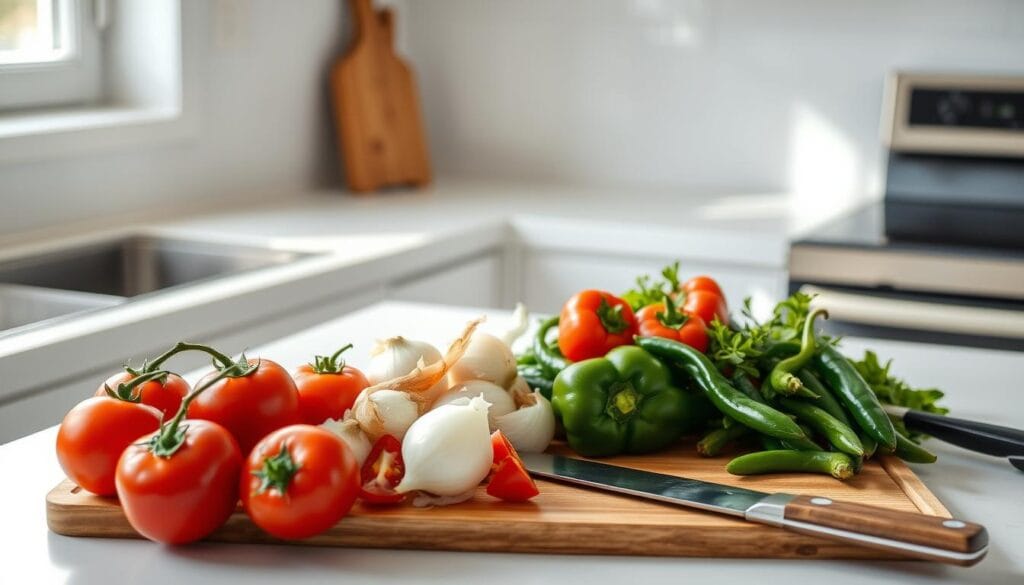
Creating a delicious Filipino comfort food like kaldereta recipe starts with vegetable preparation. The right veggies can make your kaldereta truly special.
Choosing the perfect vegetables is key. You want ones that match the rich meat and boost the flavor.
- Potatoes: Select waxy varieties like Desiree or Charlotte
- Carrots: Cut into chunky diagonal slices
- Bell peppers: Add vibrant color and sweet undertones
- Green peas: Provide a burst of freshness
Timing is crucial when adding veggies to your kaldereta. Prepare your veggies first. Wash and chop them uniformly for even cooking. Add harder veggies like carrots and potatoes early. Delicate ones like peas go in later.
Pro tip: Chop vegetables into uniform pieces to cook evenly. This way, all veggies cook well without becoming mushy.
The vegetables you use often vary depending on your region in the Philippines. Some people add olives or liver spread for extra flavor in this comfort food.
Creating the Perfect Spice Balance
Making an authentic kaldereta is more than just following a recipe. It’s about mastering the art of spice balancing. With the right seasoning, your spicy kaldereta can become a true masterpiece.
The secret to a great spicy kaldereta is knowing the right spice combinations. It’s also about adding your own touch. Traditional recipes start with a mild flavor that you can adjust to your liking.
Traditional Spice Combinations
Filipino cooks have perfected spice blends over the years. A classic spicy kaldereta includes:
- Sweet paprika for depth
- Black pepper for warmth
- Dried chili flakes for controlled heat
- Garlic powder for aromatics
Heat Level Adjustments
Your taste in spice determines how spicy your kaldereta will be. Start with a little spice and add more as you like. Pro tip: Fresh or dried chili peppers give a better heat than hot sauces.
Seasoning Tips for Optimal Flavor
Getting the spice balance right is all about finesse. Here are some tips:
- Add spices a little at a time
- Check the flavor as you go
- Use fresh ground spices for the best taste
- Let spices simmer in oil before adding liquid
A good kaldereta should excite your taste buds without being too much. It’s all about finding the perfect balance of flavors that honor Filipino cooking traditions.
Serving and Presentation Suggestions
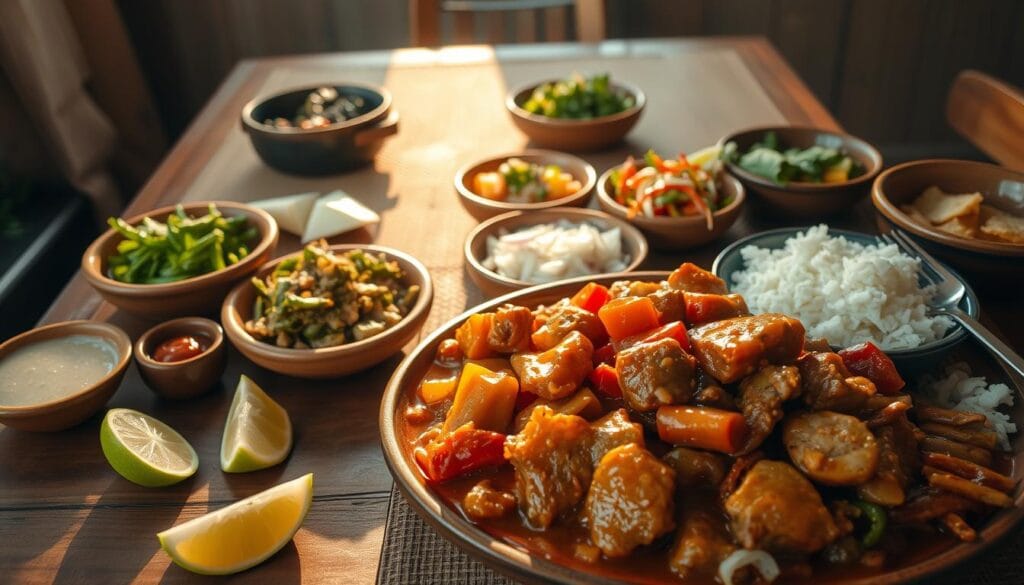
When you serve this traditional Filipino dish, how you present it matters a lot. It can elevate an ordinary meal into something unforgettable. The rich, hearty stew needs careful attention to how it’s plated and served.
Your kaldereta looks best when served over steaming white jasmine rice. The fluffy grains soak up the robust sauce and complement the tender meat. This classic pairing makes the dish a true Filipino comfort food that will please everyone.
- Serve in a deep ceramic bowl to showcase the stew’s rich colors
- Garnish with fresh chopped parsley or cilantro for added freshness
- Offer extra sauce on the side for rice dipping
Here are some side dishes that can enhance your kaldereta experience:
- Atchara (pickled green papaya) for a tangy contrast
- Crisp green salad to balance the hearty stew
- Garlic bread or pandesal for sauce soaking
The right beverage choice can elevate your meal. A cold San Miguel beer or a crisp white wine can balance the rich flavors. This creates a dining experience that celebrates the depth of Filipino cuisine.
For low-carb options, make sure to explore these keto ground beef recipes, which pair well with quick pressure-cooked meals.
Conclusion
Making an authentic kaldereta recipe is more than just following steps. It’s about diving into Filipino culinary tradition. Your journey shows how simple ingredients can become a rich, complex dish that shares a story of cultural heritage.
Remember, every step in making kaldereta is important. Choosing the right beef and building flavors are key. Your care will make this classic dish truly special. The secret to great kaldereta is patience and respect for traditional cooking.
Your cooking journey doesn’t stop here. Try different regional flavors, adjust spices, or add family secrets. Kaldereta is a canvas for your creativity, letting you connect with Filipino cuisine in your own way.
Share this amazing Filipino beef stew with friends and family. Every pot of kaldereta is a link to a rich culinary tradition. It’s a delicious way to show the warmth and hospitality of Philippine cooking.
FAQ
What is kaldereta and where does it come from?
Can I make kaldereta with chicken ?
What is liver spread, and why is it important in kaldereta?
How spicy is traditional kaldereta?
What is the best way to tenderize the meat for kaldereta?
What should I serve with kaldereta?
How long can I store leftover kaldereta?
Are there vegetarian versions of kaldereta?
Have You Tried Our Recipe Today?
i like it
i like it very weel