
Salmon Wellington
Cut into a golden crust and listen to the crisp crack under your knife. Inside, you find tender, buttery salmon wrapped in flaky pastry with a rich, savory filling. That first bite blends crisp layers with soft, juicy fish. This dish is also known by its French name, Salmon en Croute, which means salmon baked in pastry.
I learned this recipe using classic culinary school methods that focus on heat control and moisture balance. In this guide, I will show you simple chef-level tricks that give you a crisp base, never a soggy bottom, and restaurant-quality results at home.
For those who enjoy hearty meat dishes, you can also explore our guide on Easy Ground Beef Recipes for Weeknight Ideas.
Table of Contents
What Is Salmon Wellington Salmon en Croute
Salmon Wellington, also known as Salmon en Croute, is a salmon fillet wrapped in puff pastry and baked until golden. The French term “en croute” means “in a crust.” In simple words, the fish is sealed inside pastry and cooked in the oven.
The dish follows the same idea as Beef Wellington, where meat is coated or layered with a filling, then wrapped in pastry. The goal is contrast. You want crisp layers outside and moist fish inside.
The roots of Wellington-style dishes trace back to Tudor period England. During that time, cooks baked meats in pastry to lock in juices and extend freshness. Over time, chefs refined the method and turned it into a center-piece dish for formal meals.
Today, Salmon Wellington feels elegant yet simple. It looks impressive, but the method is direct. When you control moisture and temperature, you get a crisp crust and tender salmon every time.
Why This Recipe Works The Science of a Crispy Crust
A perfect salmon wellington depends on two key factors. Temperature control and moisture control.
1. The Cold Salmon Technique
Keep the salmon cold until the moment you wrap it in pastry. Cold fish cooks more slowly at the center. This gives the puff pastry enough time to rise and turn crisp before the salmon overcooks.
If the salmon starts at room temperature, the inside may finish too fast. The pastry will still be pale while the fish turns dry. Cold salmon solves that problem. It creates balance. Crisp outside. Juicy inside.
Professional kitchens rely on this simple rule. Cold protein equals better texture.
2. Moisture Absorbers Protect the Pastry
Water is the enemy of puff pastry. Salmon releases natural juices as it bakes. Spinach also holds water. If you skip moisture control, the bottom crust turns soft.
This recipe uses smart barriers:
- Cook the spinach first to remove excess water.
- Add Parmesan cheese to help absorb moisture.
- Cool the filling fully before assembly.
Some cooks also mix in fine breadcrumbs. They soak up liquid and protect the pastry base.
When you control moisture and temperature together, the result is reliable. The pastry rises high. The layers stay flaky. The bottom stays crisp.
Ingredients Needed
For best results, use fresh ingredients and keep the salmon cold until assembly.
For the Pastry Base
- 1 sheet frozen puff pastry, thawed overnight in the refrigerator
- 2 skinless salmon fillets, about 6 ounces each, pin bones removed
- 1 large egg yolk mixed with 1 teaspoon water for brushing
For the Spinach Filling
- 4 cups fresh baby spinach, loosely packed
- 2 teaspoons extra virgin olive oil
- 2 cloves garlic, finely minced
- 2 tablespoons freshly grated Parmesan cheese
- ½ teaspoon dried thyme
- ½ teaspoon ground black pepper, divided
- ¾ teaspoon kosher salt, divided
For the Flavor Butter
- 1 tablespoon unsalted butter, melted but not hot
- ½ tablespoon Dijon mustard
- Zest of 1 small lemon, about ¾ teaspoon
Why These Ingredients Matter
Use high quality salmon. Wild caught fish often has firmer texture and deeper flavor. Puff pastry should stay cold before baking so it rises into light, flaky layers. Fresh lemon zest brightens the richness of the salmon. Parmesan adds salt and helps absorb moisture from the spinach.
Each ingredient plays a clear role. Flavor. Texture. Structure. When combined with proper technique, they create a crisp, golden salmon wellington with no soggy base.
How to Make Salmon Wellington
Follow each step closely. Timing and temperature matter.
1. Preheat and Prepare
Preheat your oven to 400°F or 200°C. Place a baking sheet inside the oven while it heats. A hot tray helps the bottom crust cook fast and stay crisp.
Line another sheet with parchment paper for assembly.
Keep the salmon in the refrigerator until the last minute. Cold fish protects the texture during baking.
2. Mix the Flavor Butter
In a small bowl, stir together:
- Melted unsalted butter
- Dijon mustard
- Lemon zest
- ¼ teaspoon salt
- ¼ teaspoon black pepper
Mix until smooth. This blend adds richness and sharp flavor to the salmon.
3. Cook the Spinach Filling
Heat olive oil in a skillet over medium heat.
Add the fresh spinach. Cook for about 1 minute, stirring gently, until fully wilted. The leaves should shrink and release moisture.
Add minced garlic, dried thyme, remaining salt, and remaining pepper. Cook for 30 seconds until fragrant. Do not brown the garlic.
Remove from heat. Stir in grated Parmesan cheese.
Transfer the mixture to a plate and spread it out. Let it cool completely. Warm filling creates steam and softens the pastry.
4. Roll and Cut the Pastry
Lightly flour your work surface.
Roll the puff pastry into a rectangle about 12 by 14 inches. Keep the thickness even so it bakes evenly.
Cut the pastry in half crosswise to create two equal rectangles.
If the pastry becomes soft, place it in the refrigerator for 5 to 10 minutes before assembling.
5. Assemble the Wellington
Pat each salmon fillet dry with paper towels. The surface must be dry.
Brush the top of each fillet with the butter mixture.
Place each fillet butter side down in the center of each pastry rectangle.
Spoon the cooled spinach mixture evenly over the top of the salmon. Spread it gently but do not press too hard.
6. Seal the Pastry
Fold the long sides of the pastry over the salmon first. Then fold the short ends to close it like a package.
Brush a little egg wash along the edges before sealing. The egg wash acts as glue.
Press the seams firmly to close. Turn each packet over so the seam faces down.
Place them on the hot baking sheet lined with parchment.
7. Finish and Bake
Brush the tops with egg wash for a deep golden color.
Use a sharp knife to score a light crosshatch pattern on the surface. Do not cut all the way through. The shallow cuts allow steam to escape and help the pastry rise evenly.
Bake for 20 to 25 minutes.
The pastry should turn deep golden brown. The internal temperature of the salmon should reach about 125 to 130°F for medium.
8. Rest and Serve
Remove from the oven and let the salmon wellington rest for 5 minutes.
This short rest allows the juices to settle and keeps the pastry crisp when sliced.
Serve warm and enjoy the contrast between flaky crust and tender salmon.
Step by Step Guide How to Fold Like a Pro
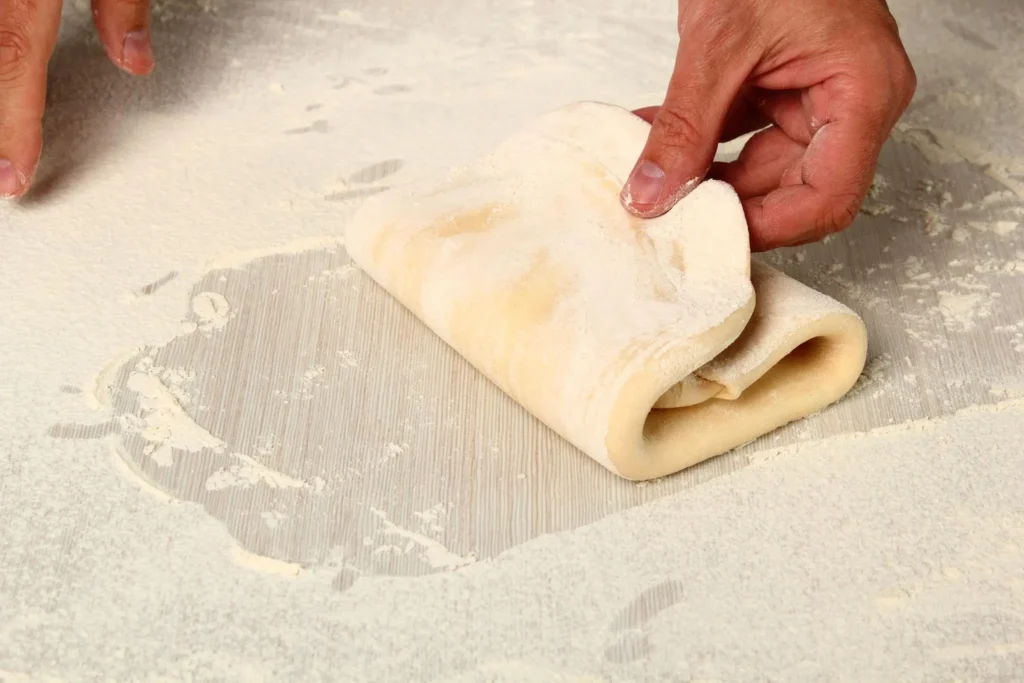
Folding is the part that makes many cooks nervous. The truth is simple. If you keep the filling cool and the pastry cold, the fold becomes easy and clean.
Step 1 Preparing the Spinach Filling
Cook the spinach until just wilted. Spread it on a plate to cool fully. Warm filling creates steam and softens the pastry.
The mixture should look thick, not watery. If you see liquid pooling, drain it off. The filling must feel dry to the touch.
A cool and firm filling gives structure and keeps the bottom crust crisp.
Step 2 Rolling and Cutting the Pastry
Lightly flour your surface.
Roll the pastry into a neat rectangle with even thickness. Uneven dough leads to uneven baking.
Cut into two equal rectangles. Each piece should be large enough to wrap fully around the salmon with slight overlap.
If the pastry feels soft or sticky, chill it for a few minutes before continuing.
Step 3 Sealing with Egg Wash Glue
Place the salmon in the center.
Fold the long sides inward first. Then fold the shorter ends to close the packet tightly.
Brush egg wash along the edges before pressing them together. The egg wash acts like glue and prevents gaps from opening in the oven.
Turn the packet over so the seam faces down. This creates a clean top surface for baking.
Step 4 Scoring for Steam Release and Style
Use a sharp knife to gently score a crosshatch pattern on top. Do not cut through the dough.
These shallow lines allow steam to escape during baking. Without them, trapped steam can create wet spots inside the pastry.
The scoring also adds a polished look. When baked, the pattern becomes golden and crisp, giving your salmon wellington a professional finish.
5 Golden Rules to Avoid a Soggy Bottom
A soggy base ruins the texture of salmon wellington. Follow these five rules and your crust will stay crisp every time.
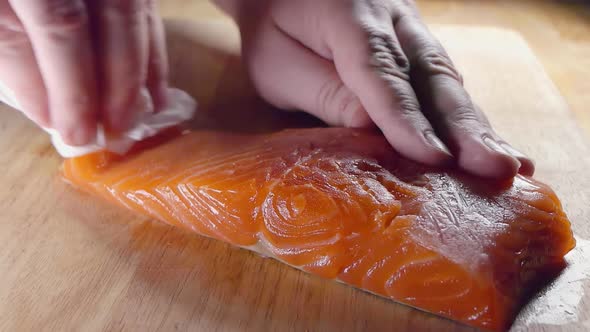
1. Pat the Salmon Completely Dry
Use paper towels to remove all surface moisture from the salmon. Press gently on both sides.
Even a thin layer of water can soak into the pastry during baking. Dry fish equals crisp pastry.
2. Preheat the Baking Tray
Place the baking sheet inside the oven while it preheats.
When you transfer the wrapped salmon onto a hot tray, the bottom starts cooking at once. This quick heat contact helps the pastry rise and brown instead of steaming.
3. Create a Proper Barrier Layer
The spinach mixture acts as a shield between the fish and the pastry.
Make sure the spinach is fully cooled and not watery. Parmesan in the filling helps absorb excess moisture. Spread the mixture evenly so the salmon does not sit directly against raw pastry.
A dry barrier protects the base from soaking.
4. Do Not Open the Oven Door
Keep the oven closed during baking.
Every time you open the door, heat escapes and the pastry loses steady rise. Fluctuating heat can cause uneven baking and soft spots.
Trust the timer and check only near the end.
5. Score the Top Surface
Use a sharp knife to score shallow lines across the top.
These cuts allow steam to escape while baking. Without venting, trapped steam condenses inside and softens the inner layers.
Small cuts make a big difference in texture.
Follow these five rules and your salmon wellington will come out golden, flaky, and crisp from top to bottom.
Bonus 3 Signature Sauces to Serve
A great salmon wellington deserves a sauce that adds contrast and depth. Here are three strong options that pair beautifully with flaky pastry and rich salmon.
1. Creamy Dijon and Dill Sauce
This is the classic choice.
You need:
- ½ cup sour cream or Greek yogurt
- 1 tablespoon Dijon mustard
- 1 tablespoon fresh chopped dill
- 1 teaspoon lemon juice
- Salt and black pepper to taste
Stir everything together until smooth. Chill for 20 minutes before serving.
The tang from Dijon and lemon cuts through the buttery pastry. Dill adds freshness that pairs naturally with salmon.
Best for: Light, balanced flavor.
2. White Wine Cream Sauce
This sauce adds richness and feels elegant.
You need:
- ½ cup dry white wine
- ½ cup heavy cream
- 1 small shallot, finely minced
- 1 tablespoon butter
- Salt and white pepper
Cook the shallot in butter over medium heat until soft. Add white wine and simmer until reduced by half. Pour in cream and cook until thick enough to coat the back of a spoon. Season lightly.
The wine adds gentle acidity. The cream creates a smooth texture that complements the crisp crust.
Best for: Dinner parties or special occasions.
3. Tangy Romesco or Lemon Caper Sauce
If you want bold flavor, choose one of these.
Simple Lemon Caper Option
- 2 tablespoons butter
- 1 tablespoon capers, chopped
- 1 tablespoon lemon juice
- Fresh parsley
Melt butter, stir in capers and lemon juice, then spoon over sliced wellington.
The briny capers brighten the salmon and balance the richness.
Quick Romesco Option
Blend roasted red peppers, toasted almonds, garlic, olive oil, and a splash of vinegar until smooth.
Romesco adds smoky depth and slight sweetness. It works well if you want something less traditional.
Each sauce changes the personality of the dish. Try different ones and see which version you prefer with your salmon wellington.
Make Ahead Storage and Reheating Instructions
Planning ahead makes salmon wellington even easier to serve for guests or holidays. The key is handling the pastry correctly so it stays crisp.
Make Ahead Instructions
You can assemble the salmon wellington up to 24 hours in advance.
Wrap the salmon in pastry with the spinach filling as directed. Do not brush with egg wash yet. Place the unbaked packets on a tray, cover loosely with plastic wrap, and refrigerate.
Before baking, brush with egg wash and score the top. Bake straight from the refrigerator. Cold pastry helps it rise better in the oven.
This method keeps the crust light and flaky.
Freezing Instructions
Freezing works best before baking.
Place the fully wrapped and unbaked salmon wellington on a tray. Freeze until firm, then wrap tightly in plastic and store in a freezer bag for up to one month.
Bake directly from frozen at 400°F or 200°C. Add about 5 to 10 extra minutes to the baking time.
Freezing after baking is not ideal. The pastry can soften when reheated and lose its crisp texture.
Storage After Baking
If you have leftovers, cool them completely.
Store in an airtight container in the refrigerator for up to 2 days.
Reheating the Right Way
Reheat only in the oven.
Place the salmon wellington on a baking sheet and warm at 375°F or 190°C for about 10 to 15 minutes until heated through.
Do not use a microwave. Microwave heat makes the pastry soft and chewy.
Using the oven restores crisp layers and keeps the texture close to freshly baked.
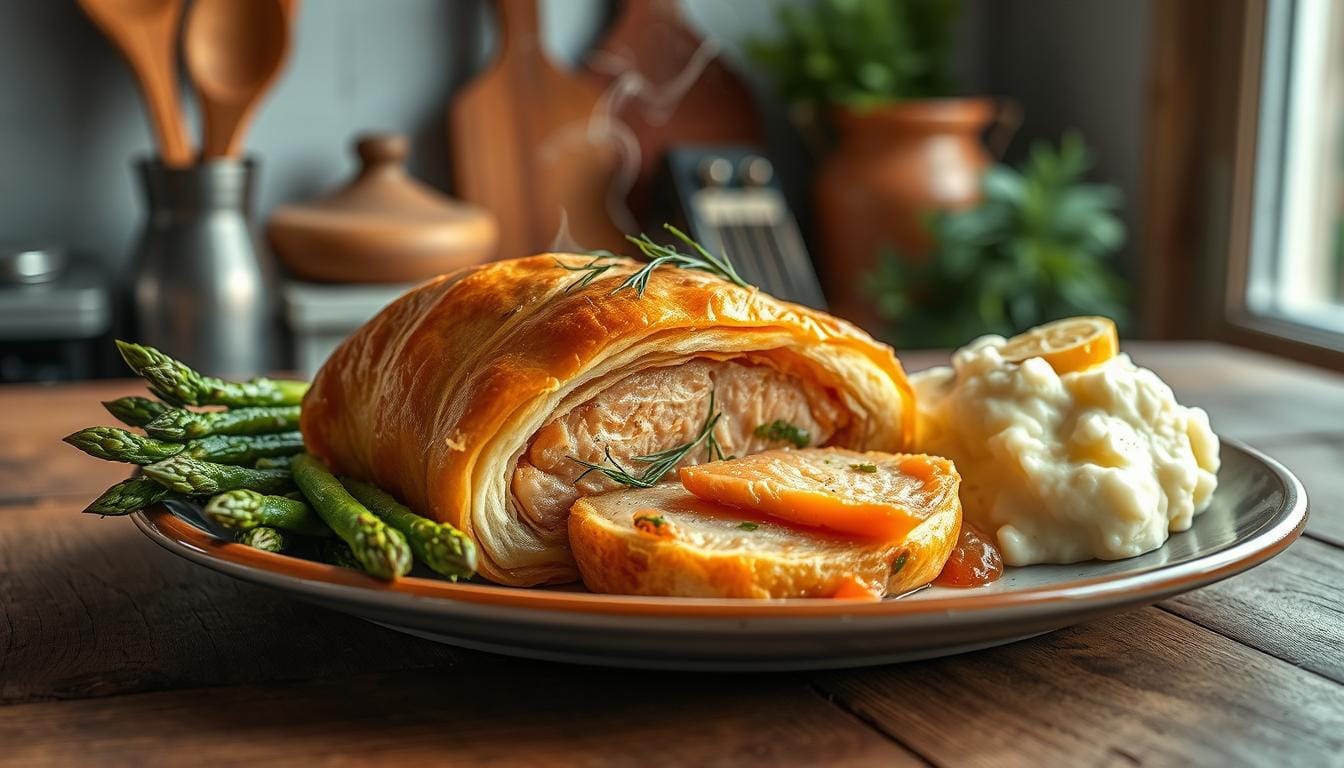
The Best Easy Salmon Wellington (Salmon en Croute)
Ingredients
Method
- Preheat oven to 400°F (200°C). Place a baking sheet inside the oven to heat.
- Mix melted butter, Dijon mustard, lemon zest, 1/4 teaspoon salt, and 1/4 teaspoon black pepper in a small bowl until smooth.
- Heat olive oil in a skillet over medium heat. Add spinach and cook until wilted. Stir in garlic, thyme, remaining salt, and pepper. Cook briefly until fragrant. Remove from heat, mix in Parmesan, and cool completely.
- Roll puff pastry into a 12×14 inch rectangle on a lightly floured surface. Cut into two equal rectangles. Chill briefly if pastry becomes soft.
- Pat salmon fillets completely dry. Brush tops with butter mixture.
- Place each salmon fillet butter side down in the center of each pastry piece. Spoon cooled spinach mixture evenly over the top.
- Fold long sides of pastry over salmon, then fold short ends to seal. Brush edges with egg wash to secure. Turn seam side down.
- Brush tops with egg wash. Score lightly with a sharp knife to allow steam to escape.
- Transfer to the hot baking sheet and bake for 20–25 minutes until deep golden brown and internal salmon temperature reaches 125–130°F (52–54°C).
- Rest for 5 minutes before slicing and serving.
Notes
Conclusion
Salmon wellington is the perfect mix of crisp pastry and tender, buttery fish. When you keep the salmon cold and control moisture in the filling, you get a golden crust with no soggy bottom. The method is simple, yet the result looks impressive enough for guests or special dinners.
This recipe works because it focuses on texture, balance, and clear technique. Follow the key rules and you will get consistent results every time.
If you tried this salmon wellington, leave a comment below and give it a star rating. I would love to hear how it turned out for you. Did you try the dill sauce or the lemon caper version? Share your twist and tag your photos on Pinterest or Facebook so others can see your creation.
Frequently Asked Questions
Salmon Wellington Sauce: What are the best sauces to serve with it?
The best sauces balance the rich pastry and buttery salmon. Creamy Dijon and dill sauce adds freshness. White wine cream sauce gives a smooth and elegant finish. Lemon caper sauce adds brightness and a slight salty bite. If you prefer bold flavor, romesco sauce brings a smoky touch. Choose a sauce that adds contrast, not heaviness.
Salmon Wellington Recipe: How to make the perfect crispy Salmon en Croute?
Start with cold salmon straight from the refrigerator. Pat it completely dry before wrapping. Cook the spinach until moisture evaporates and let it cool fully. Preheat the baking tray so the bottom crust begins cooking at once. Score the top lightly to release steam. Bake at high heat until the pastry turns deep golden brown.
Salmon Wellington Gordon Ramsay: How to achieve restaurant quality results at home?
Chefs like Gordon Ramsay focus on precision. Keep ingredients cold. Season each layer properly. Avoid overfilling the pastry. Use egg wash for color and tight sealing. Most important, rest the baked wellington for a few minutes before slicing. This keeps juices inside and prevents a soggy base.
Salmon Wellington Origin: What is the history behind this classic dish?
Salmon wellington follows the same pastry wrapped method as Beef Wellington. The technique dates back to Tudor period England, when cooks baked meats in pastry to seal in juices. Over time, the dish became a centerpiece for formal dinners and celebrations.
Salmon Wellington Price vs Homemade: Is it cheaper to make it from scratch?
Yes. Making salmon wellington at home usually costs less than ordering it at a restaurant. Store bought puff pastry and fresh salmon are affordable when purchased wisely. On average, homemade portions can cost much less per serving while offering better quality and freshness.
Can you make Salmon Wellington ahead of time or freeze it?
Yes. Assemble it up to 24 hours ahead and store it in the refrigerator without egg wash. For longer storage, freeze it before baking. Bake directly from frozen and add extra cooking time. Reheat leftovers in the oven, not in a microwave, to keep the pastry crisp.