
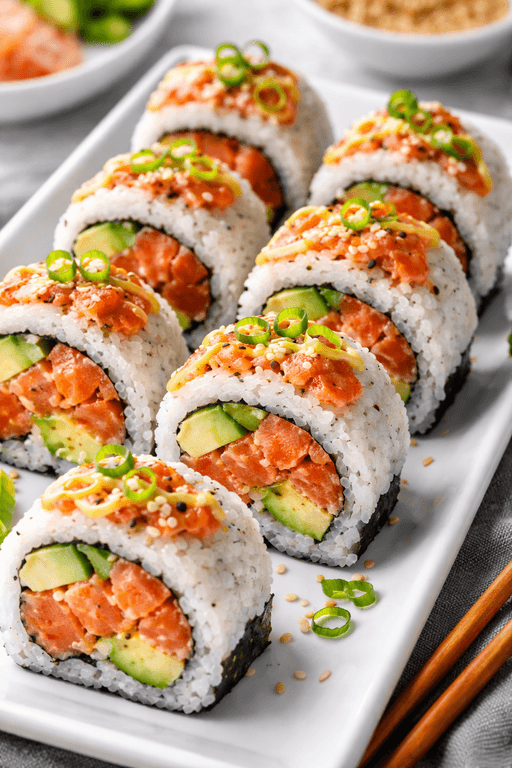
Spicy Salmon Roll
I have made sushi at home for years, and I can say this with confidence. A spicy salmon roll recipe saves money and gives you full control over freshness. One roll at a restaurant can cost as much as a full homemade batch. When you prepare it yourself, you choose the salmon, adjust the spice, and serve it fresh.
The flavor is bold yet balanced. Creamy spicy mayo blends with rich, buttery salmon. Seasoned sushi rice adds a gentle tang. Crisp cucumber and soft avocado bring contrast in texture.
This spicy salmon roll recipe is perfect for busy evenings when you want something quick and impressive. If you love fast homemade meals, you might also enjoy our Easy Ground Beef Recipes for Weeknight Ideas for more simple dinner inspiration.
Quick Stats
Prep Time: 25 minutes
Cook Time: 20 minutes if using roasted salmon, 0 minutes if using raw
Difficulty Level: Easy to Moderate
This homemade spicy salmon sushi is perfect for a relaxed family sushi night or a fun dinner with friends.
Table of Contents
Cost Comparison: Restaurant vs Homemade
Many readers ask one simple question before making sushi at home. Is it really cheaper?
Here is a clear breakdown that shows the difference.
| Option | Average Cost Per Roll | What You Get |
| Restaurant such as Benihana | $12 to $15 | Single roll, fixed portion, service included |
| Homemade | $3 to $5 | Full control of ingredients, multiple rolls from one batch |
Why the Price Gap Matters
At a restaurant, you pay for labor, rent, and service. That increases the price quickly. Ordering four rolls for a small group can cost $50 or more.
At home, the same budget can produce three to four times the quantity. You also choose the salmon quality, adjust spice levels, and add extra toppings without extra charges.
This kind of side by side comparison is popular because readers clearly see the savings. It makes the idea of a sushi night at home even more appealing.
Demystifying Sushi Grade Salmon
What Sushi Grade Really Means
Many people think sushi grade is an official USDA label. It is not. There is no formal government grading system for raw sushi fish.
In simple terms, sushi grade refers to fish that has been frozen at very low temperatures to kill parasites. This process is called parasite destruction. Proper freezing makes raw salmon safer to eat when handled correctly.
Freshness still matters. The fish should smell clean, feel firm, and look vibrant. Dull color or a strong odor is a warning sign.
Where to Buy Safe Salmon
Buy from trusted sellers that understand raw fish handling. Good options include:
- Fulton Fish Market
- Whole Foods
- Local Japanese grocery stores with high seafood turnover
If possible, ask the fishmonger when the salmon was delivered and whether it was previously frozen for raw use. Clear answers build trust.
For premium quality, some home cooks look for brands like Kvarøy Arctic, known for clean farming practices and consistent texture.
The Cooked Alternative for Peace of Mind
Not everyone feels comfortable eating raw fish. That is completely fine.
You can make a cooked spicy salmon roll using roasted or air fried salmon. Simply season the fillet lightly with salt. Bake at 400°F for about 8 to 10 minutes, or until it flakes easily with a fork. Let it cool fully before mixing with spicy mayo.
The texture becomes softer and slightly flaky instead of silky. The flavor is still rich and satisfying. For beginners, this version often feels less intimidating and just as delicious.
Ingredients Needed for Spicy Salmon Roll
Below is everything you need to make a fresh and flavorful spicy salmon roll at home. I grouped the ingredients by component so the process feels simple and organized.
For the Sushi Rice Base
- 2 cups short grain Japanese sushi rice
- 2 cups filtered water
- 1/4 cup rice vinegar
- 1 tablespoon white sugar
- 1 teaspoon fine salt
Tip: Dissolve the vinegar, sugar, and salt together before mixing into the rice. This helps the seasoning spread evenly.
For the Spicy Salmon Filling
- 1/2 pound sushi grade salmon, skin removed and finely diced. High quality options like Kvarøy Arctic are known for clean flavor and firm texture
- 2 to 3 tablespoons Japanese mayonnaise such as Kewpie for a richer taste
- 1 to 2 teaspoons sriracha, adjust based on your heat preference
- 1/2 teaspoon toasted sesame oil for a light nutty note
- 1 tablespoon green onions, very thinly sliced
Keep the salmon very cold until mixing. Cold fish is easier to dice cleanly and keeps its shape.
For Assembly and Serving
- 4 to 5 sheets roasted nori seaweed
- 1 English cucumber, cut into thin matchsticks
- 1 ripe avocado, sliced evenly
- Toasted sesame seeds, black or white
For dipping and serving:
- Soy sauce or tamari for a gluten free option
- Wasabi
- Pickled ginger
Using fresh vegetables adds texture contrast. Crisp cucumber and creamy avocado balance the spicy salmon perfectly.
How to Make Spicy Salmon Roll
Before you begin, read through all steps once. If you plan to roast salmon, preheat your oven to 400°F first. Sushi rice needs time to cool to room temperature, so start there.
1. Prepare the Sushi Rice
- Place the sushi rice in a fine mesh strainer. Rinse under cold running water. Stir gently with your fingers until the water runs clear. This removes excess starch and prevents gummy rice.
Important Rice Note:
Use only short grain Japanese sushi rice. The high starch content allows the rice to hold together when rolled.
Never use long grain rice like Basmati. The lack of starch will cause the roll to fall apart. The grains will stay separate instead of forming a cohesive layer.
For best flavor, cook the rice with filtered water. After seasoning, keep it at room temperature. Cold rice becomes firm and harder to spread evenly.
- Add the rinsed rice and 2 cups water to a pot or rice cooker. Cook according to package directions.
- Once cooked, keep the lid on and let the rice rest for 10 minutes. This step allows moisture to settle evenly.
- Transfer the hot rice to a wide bowl. Slowly pour in the prepared vinegar mixture. Fold the rice gently using a wooden spoon. Use a slicing motion instead of stirring to avoid crushing the grains.
- Let the rice cool to room temperature. Do not refrigerate. Cold rice becomes hard and difficult to spread.
2. Make the Spicy Salmon Mixture
- Keep the salmon chilled until ready to cut. Use a sharp knife and dice into small, even cubes about 1/4 inch in size. Uniform pieces create a smooth texture in each bite.
- In a chilled bowl, combine diced salmon, Japanese mayo, sriracha, sesame oil, and sliced green onions.
- Mix gently with a spoon. Do not overwork the fish. You want it coated, not mashed.
- Cover and refrigerate while you set up your rolling station.
If using cooked salmon, bake the fillet until it flakes easily. Let it cool fully. Then shred lightly and mix with the same sauce ingredients.
3. Set Up Your Rolling Station
- Place a bamboo sushi mat on a clean flat surface. For easy cleanup, wrap the mat in plastic wrap.
- Fill a small bowl with water and a splash of rice vinegar. This is called Tezu water. Dip your fingers into it to prevent rice from sticking to your hands.
- Keep all ingredients within reach. Once you start rolling, you want a smooth flow.
4. Assemble the Roll
- Place one sheet of nori on the mat with the rough side facing up. The rough side helps the rice grip better.
- Wet your fingers lightly. Take about 1/2 to 3/4 cup of sushi rice and spread it evenly across the nori. Press gently. Leave about 1 inch of space at the top edge. This border will help seal the roll.
- Spoon a line of spicy salmon across the center of the rice.
- Add a few strips of cucumber and slices of avocado beside the salmon. Do not overfill. Too much filling makes rolling difficult.
5. Roll and Seal
- Lift the edge of the mat closest to you. Fold it over the filling while holding the ingredients in place with your fingers.
- Use a tuck and pull motion. Pull the mat slightly toward you to tighten the roll as you shape it. Apply firm but gentle pressure to create a compact cylinder.
- Continue rolling forward until the seam rests on the bottom.
- Dab a small amount of water along the top border of nori to seal it shut.
- Give the roll one final light squeeze using the mat. This sets the shape and keeps the filling secure.
6. Slice and Serve
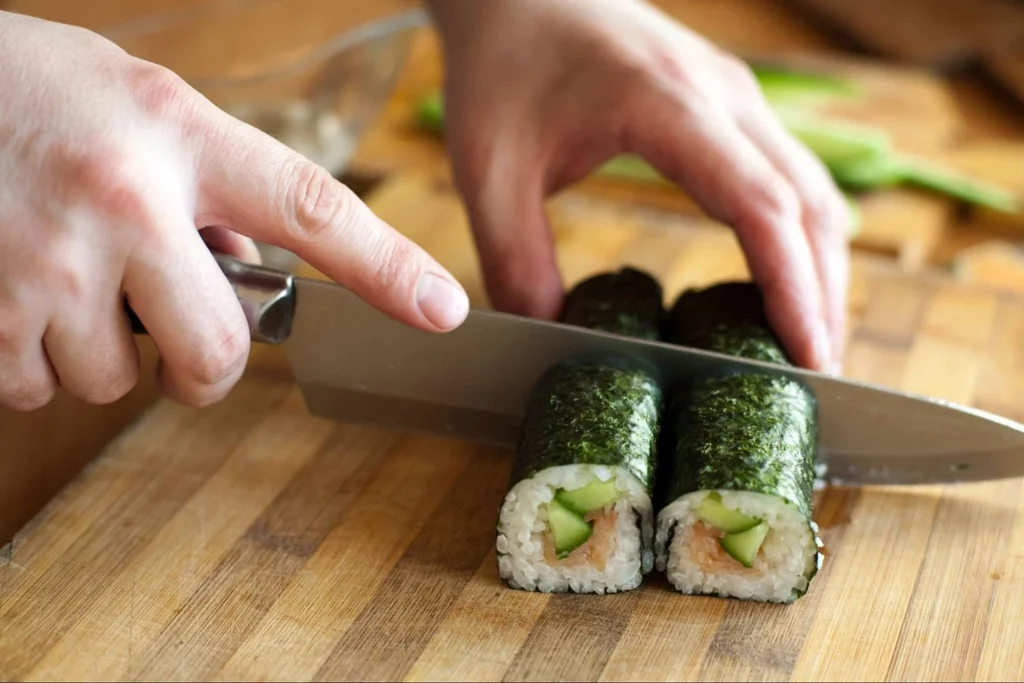
- Use a very sharp knife. Dip the blade in water and wipe it clean between each cut. A clean blade prevents tearing.
- Cut the roll in half first. Place the halves side by side. Slice into 6 or 8 equal pieces.
- Arrange on a plate. Drizzle extra spicy mayo on top if desired. Sprinkle with toasted sesame seeds.
Serve immediately with soy sauce or tamari, wasabi, and pickled ginger for a complete sushi night experience.
Variations to Level Up Your Spicy Salmon Roll
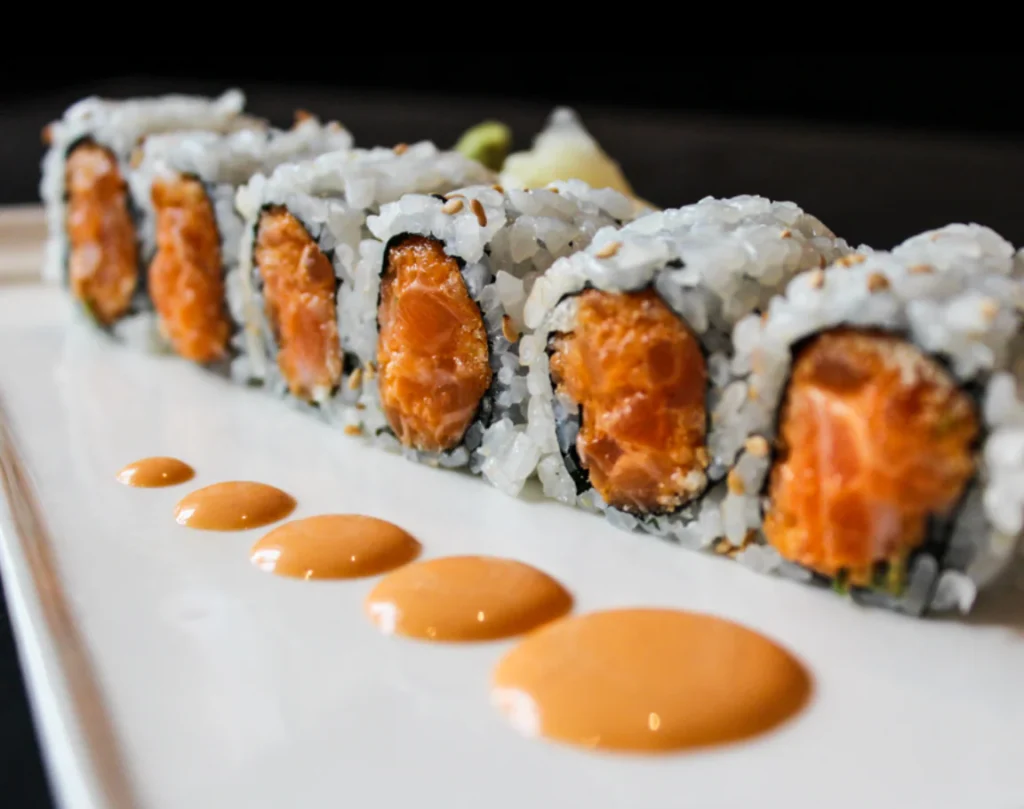
Once you master the classic version, you can adjust the spicy salmon roll to match your taste, diet, or texture preference. These ideas add variety while keeping the core flavor intact.
Uramaki Style Inside Out Roll
This version places the rice on the outside and the nori inside.
After spreading the rice over the nori, flip the sheet so the rice touches the mat. Add the spicy salmon filling directly onto the nori side. Roll tightly as usual.
Before slicing, sprinkle toasted sesame seeds over the rice. You can also add tobiko for a pop of color and light crunch. The outside rice creates a softer bite and a restaurant style look.
The Crunch Factor
If you enjoy texture contrast, add crunch inside the roll.
Mix in a spoonful of tempura flakes with the spicy salmon filling. You can also sprinkle crushed panko breadcrumbs inside the roll before sealing. The crispy layer balances the creamy mayo and smooth avocado.
Serve right away so the crunch stays crisp.
Dietary Tweaks
You can adjust the recipe to fit different needs without losing flavor.
Keto or Low Carb Option
Replace sushi rice with finely chopped cauliflower rice. Lightly sauté it to remove excess moisture, then season with rice vinegar and a pinch of salt. The texture will differ, but it still holds the filling well.
Gluten Free Option
Swap regular soy sauce for tamari. Most spicy salmon roll ingredients are naturally gluten free, but always check labels on mayo and sauces.
These small changes allow more people to enjoy homemade spicy salmon sushi without feeling restricted.
Pro Tips for Spicy Salmon Roll Success
Small details can change your results. These simple tips help your spicy salmon roll look clean and taste balanced.
Temperature Matters
Keep the rice at room temperature when assembling. Warm rice spreads easily and sticks to the nori. Cold rice becomes firm and hard to shape.
The salmon should stay cold until mixing. Chilled fish keeps its structure and feels fresh on the tongue.
Roll Tight but Not Crushed
Use the bamboo mat to apply even pressure. After folding the roll over the filling, press gently across the entire length. Avoid squeezing too hard. Too much force can push the filling out the sides.
Aim for a firm cylinder that holds together when sliced.
Control Rice Stickiness
Sushi rice is sticky by design. That helps it bind to the nori. Still, it can cling to your hands.
Dip your fingers lightly into vinegar water before touching the rice. Shake off excess water so the rice does not become soggy. Repeat as needed.
Clean Cuts Every Time
Use a very sharp knife. Wet the blade and wipe it clean after each slice. A damp, clean knife prevents dragging and keeps each piece neat.
If the roll squashes while cutting, apply slightly less pressure and let the knife glide through in one smooth motion.
With these small adjustments, your homemade spicy salmon sushi will look polished and taste like it came from a sushi bar.
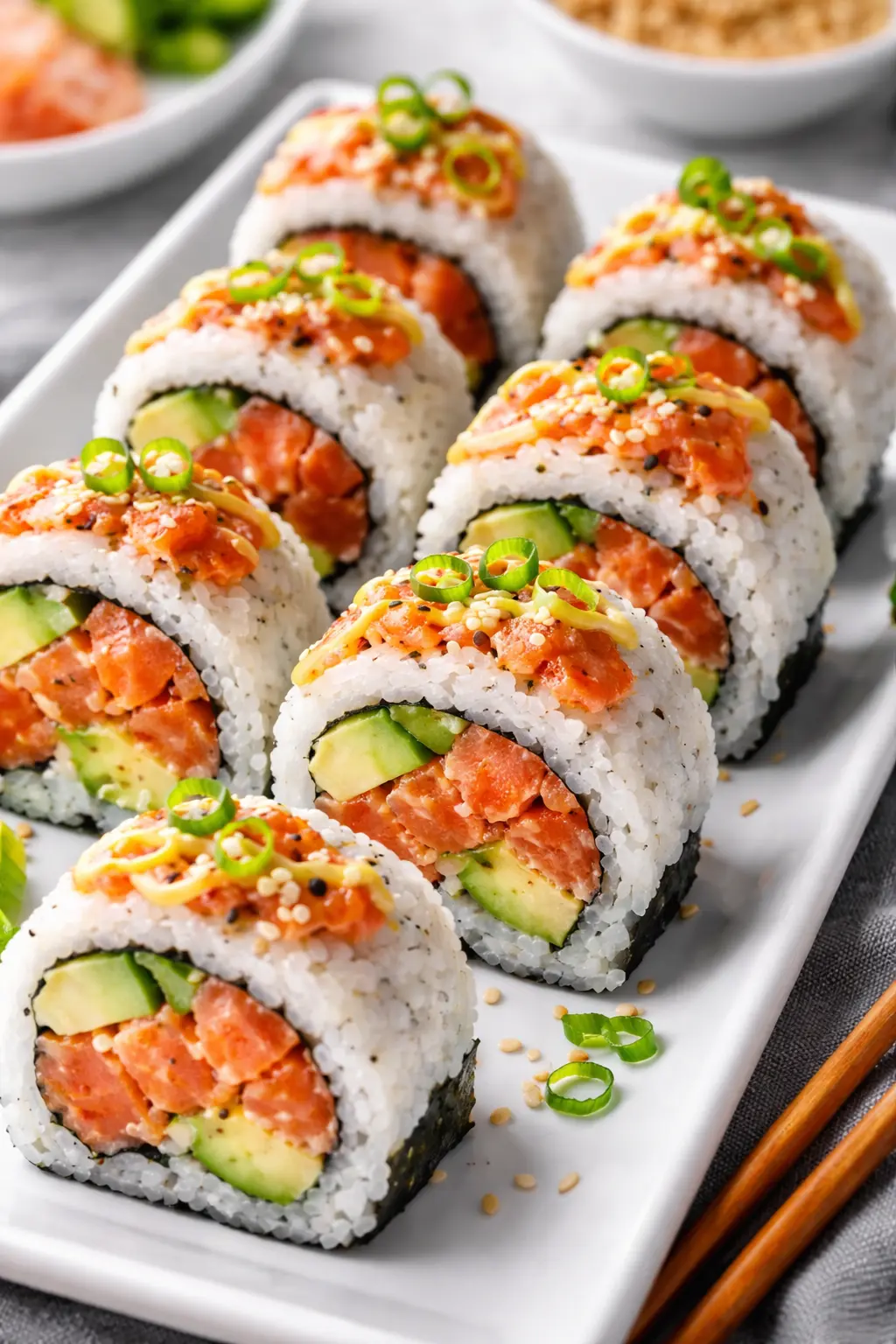
Spicy Salmon Roll
Ingredients
Method
- Rinse sushi rice under cold water until the water runs clear. Cook with 2 cups water according to package instructions. Let rest covered for 10 minutes.Mix rice vinegar, sugar, and salt until dissolved. Fold gently into warm rice using a slicing motion. Cool to room temperature.
- Dice chilled salmon into small even cubes. In a bowl, gently mix salmon with mayonnaise, sriracha, sesame oil, and green onions. Cover and refrigerate until ready to use.
- Place bamboo mat on a flat surface and cover with plastic wrap if desired. Prepare a small bowl of water mixed with a splash of rice vinegar for your hands.
- Place nori sheet rough side up. Spread 1/2 to 3/4 cup rice evenly, leaving 1 inch at the top. Add a line of spicy salmon across the center. Top with cucumber and avocado slices.
- Lift the mat edge and roll tightly over the filling, applying gentle pressure to form a compact cylinder. Seal the edge with a dab of water.
- Using a sharp wet knife, slice the roll into 6 to 8 pieces. Clean the blade between cuts. Garnish with sesame seeds and serve with soy sauce or tamari, wasabi, and pickled ginger.
Notes
Conclusion and Call to Action
Making a spicy salmon roll at home is simpler than most people think. You control the quality of the salmon, the level of heat, and the freshness of every ingredient. You also save money compared to restaurant prices, especially when preparing multiple rolls for family or friends.
The balance of creamy spicy mayo, rich salmon, seasoned rice, and crisp vegetables creates a satisfying bite every time. Once you practice the rolling technique, sushi night becomes a fun and repeatable tradition.
Now it is your turn.
Host your own sushi night and share your spicy salmon roll creations on social media. Tag your photos and show your favorite variations.
If you enjoyed this recipe, try pairing it with homemade pickled ginger or a warm bowl of miso soup to complete the meal.
Frequently Asked Questions
Is a spicy salmon roll raw or cooked?
A spicy salmon roll is usually made with raw salmon that has been properly frozen for safety. However, you can also make it with cooked salmon. Many people choose roasted or air fried salmon if they prefer not to eat raw fish.
What is exactly on a spicy salmon roll?
A classic spicy salmon roll includes sushi rice, nori seaweed, diced salmon mixed with spicy mayo, and often cucumber or avocado. The spicy sauce is usually made with Japanese mayo and sriracha. Some versions include sesame seeds or tempura flakes for added texture.
What are the essential spicy salmon roll ingredients?
The core ingredients are short grain sushi rice, rice vinegar seasoning, sushi grade salmon, Japanese mayo, sriracha, and nori sheets. Cucumber and avocado are common additions. Soy sauce, wasabi, and pickled ginger are typically served on the side.
How many calories are in a spicy salmon roll?
A standard spicy salmon roll with 6 to 8 pieces contains about 250 to 350 calories. The total depends on the amount of mayo used and whether extra toppings like tempura flakes are added.
Can I make a cooked spicy salmon roll?
Yes, you can. Simply bake or air fry the salmon until it flakes easily. Let it cool before mixing it with spicy mayo. The texture becomes softer and slightly flaky, but the flavor remains rich and satisfying.
What is usually in a salmon roll vs. a spicy salmon roll?
A regular salmon roll typically contains raw salmon and rice wrapped in nori, sometimes with avocado. A spicy salmon roll includes diced salmon mixed with spicy mayo. The sauce adds heat and creaminess that the plain salmon roll does not have.