
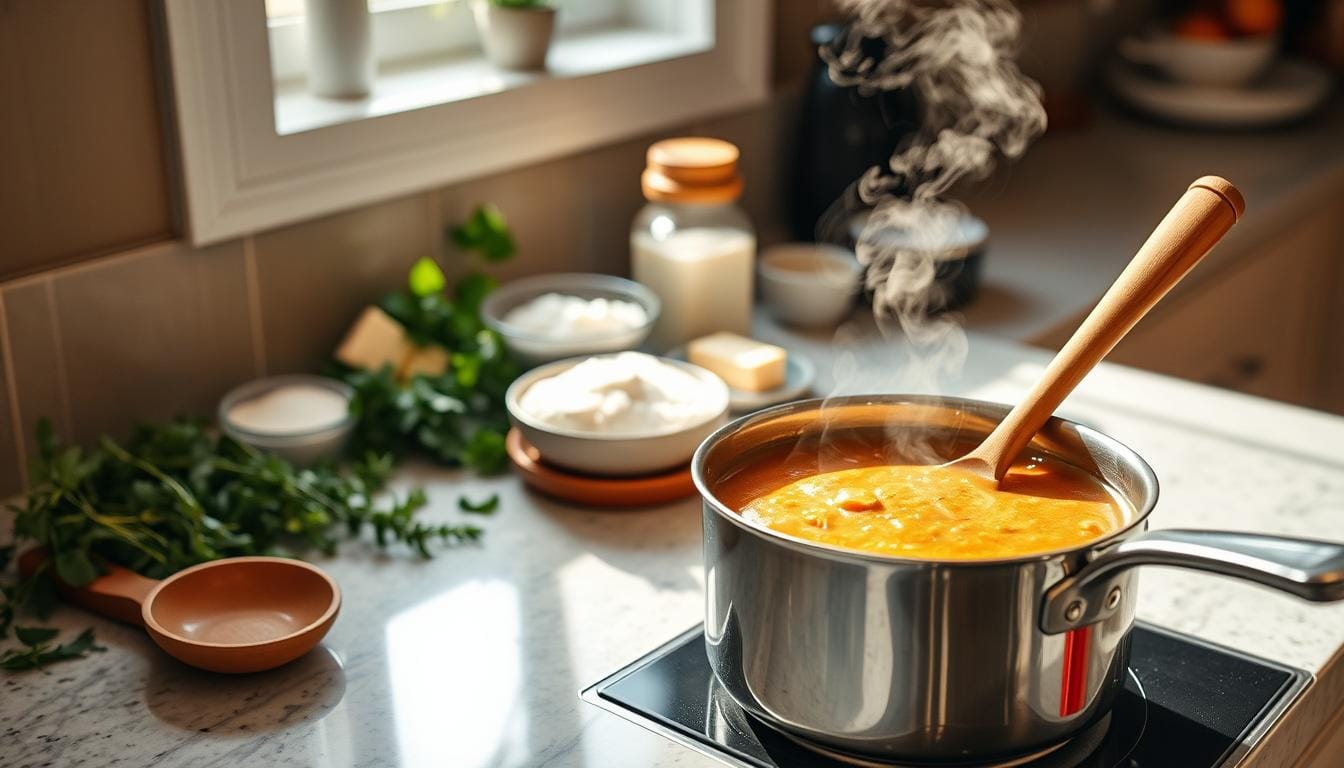
How to Make Turkey Gravy Without Drippings (5 Easy Steps)
Thanksgiving at my grandmother’s house was special. The smell of turkey gravy filled the air, making everyone excited. I thought only pan drippings could make great gravy. But I learned a secret: you can make amazing gravy without drippings.
Ever wanted that classic gravy but didn’t have drippings? Don’t worry. Making turkey gravy without drippings is easy. This guide will change how you cook, whether you’re deep-frying, smoking, or preparing ahead.
I’ll show you how to make rich, flavorful turkey gravy with just pantry staples. You’ll get that smooth, deep flavor everyone loves. Get ready to become a homemade gravy pro!
If you enjoy homemade sauces, you might also like this guide on beef gravy, which shows step-by-step how to make a rich gravy from scratch.
Table of Contents
Understanding the Basics of Gravy Making
Learning to make Turkey Gravy Without Drippings is a must for every home cook. This simple skill can elevate any meal, turning everyday dinners into something special. Whether it’s a holiday feast or a weeknight dinner, knowing how to make Turkey Gravy Without Drippings ensures you always have a flavorful, smooth gravy ready.
Gravy ingredients are simple, but mixing them right is tricky. The secret to a great gravy is knowing how these parts come together.
Essential Equipment for Perfect Gravy
To make great gravy, you need a few tools:
- A heavy-bottomed saucepan for even heat
- A sturdy whisk to avoid lumps
- Measuring cups and spoons for exact amounts
- A fine-mesh strainer for a smooth texture
Key Ingredients Overview
Your gravy will need:
- Fat: Butter or oil as the base
- Flour: For thickening
- Broth: Chicken or turkey stock for flavor
- Seasonings: Salt, pepper, and herbs
Importance of Temperature Control
Temperature is key when making Turkey Gravy Without Drippings. Too high, and the flour can burn; too low, and it won’t thicken properly. Maintain steady heat and stir constantly for a smooth, rich sauce.
Pro tip: Always start with room temperature broth to prevent sudden temperature changes that can cause lumping.
Secret Ingredients for Rich Flavor
Creating a flavorful gravy without drippings is possible. Professional chefs use special gravy enhancers to make ordinary sauces taste amazing.
Discover the secret to deep, complex flavors with these ingredients:
- Soy Sauce: Adds umami depth and rich, savory notes to your gravy
- Miso Paste: Provides an intense, fermented flavor profile
- Worcestershire Sauce: Brings tangy complexity to the gravy
- Bouillon Cubes: Concentrates meat-based flavors instantly
Enhance the flavor of your Turkey Gravy Without Drippings by adding a few key ingredients. Just a dash of soy sauce or a teaspoon of miso paste can make it truly delicious.
Pro Tip: Start with small amounts of these gravy enhancers and taste as you go to achieve the perfect balance.
Try these ingredients to make a gravy that you love. Each one adds a special touch to your sauce, making your meal unforgettable.
The Art of Toasting Flour for Deep Flavor
Unlocking the secret to rich, flavorful gravy starts with a simple yet transformative technique: toasting flour. This method elevates your roux for gravy from ordinary to extraordinary. It creates a depth of flavor that will impress even the most discerning palates.
Toasted flour isn’t just a cooking trick – it’s a game-changing approach to building complex flavors in your kitchen. By carefully heating flour, you’ll unlock a nutty, sophisticated taste. This transforms basic gravies into culinary masterpieces.
Proper Toasting Techniques
Mastering toasted flour requires patience and attention to detail. Here’s how to do it right:
- Use a dry, heavy-bottomed skillet
- Select a medium-low heat setting
- Stir constantly to prevent burning
- Watch for color changes carefully
Timing and Temperature Control
For perfect Turkey Gravy Without Drippings, toasting the flour correctly is essential. Begin with a cool pan and slowly increase the heat, aiming for a light golden-brown color that releases a rich, nutty aroma. This usually takes 5–7 minutes of careful stirring.
Signs of Perfectly Toasted Flour
Recognizing when your flour is perfectly toasted takes practice. Look for these telltale signs:
- A light golden-brown color
- A nutty, warm fragrance
- A slightly darker shade than raw flour
- A smooth, even texture
By taking a few extra minutes to toast the flour, you can create a roux that elevates turkey gravy without drippings, adding rich depth and complexity. This simple step transforms an ordinary sauce into a smooth, flavorful gravy that feels truly special.
Mastering Brown Butter Technique

Creating a delicious brown butter gravy starts with understanding the transformative power of butter. The brown butter technique makes your gravy go from ordinary to extraordinary. It adds a rich, nutty depth that will make your guests ask for seconds.
To begin your butter roux journey, start by melting butter in a light-colored pan. This allows you to see the color changes clearly. Watch as the butter transitions through several stages:
- Foaming stage: Butter bubbles and creates white foam
- Golden stage: Butter turns a light golden color
- Brown butter stage: Darker golden color with visible brown flecks
The key to perfect brown butter gravy is patience and careful monitoring. Keep the heat at medium and stir constantly. You’ll know you’ve reached the ideal point when the butter smells nutty and develops a deep golden-brown color with small brown specks at the bottom of the pan.
Pro tip: Remove the pan from heat the moment the butter turns golden brown to prevent burning.
Your brown butter will serve as an incredible flavor base for your gravy. It creates a complex taste profile that rivals traditional pan drippings. The butter roux technique transforms simple ingredients into a luxurious sauce that will elevate any holiday meal.
For more turkey dinner ideas, make sure to explore our collection of recipes with ground turkey that includes healthy and flavorful options.
How to Make Turkey Gravy Without Drippings
Making turkey gravy without drippings is simpler than you might think. This method lets you create a rich, flavorful sauce. It will make your holiday meal even better, even without traditional pan drippings.
The secret to great gravy lies in the flavors you develop, and turkey gravy without drippings can taste just as rich and satisfying with a few simple techniques. These small tricks help create a homemade gravy that’s full of depth and flavor.
Step-by-Step Gravy Preparation
- Melt 4 tablespoons of butter in a saucepan over medium heat
- Whisk in 4 tablespoons of all-purpose flour to create a smooth roux
- Cook the roux for 2-3 minutes, stirring constantly to prevent burning
- Gradually pour in 2 cups of warm chicken or turkey stock
- Whisk continuously to prevent lumps from forming
- Simmer until the gravy reaches desired thickness
Common Mistakes to Avoid
- Never stop stirring during roux preparation
- Avoid adding cold liquid to hot roux
- Don’t rush the thickening process
Troubleshooting Tips
If your gravy gets too thick, whisk in more warm stock. When making turkey gravy without drippings, an immersion blender or a fine-mesh sieve can help fix lumps and create a smooth, silky texture.
Pro tip: Enhance your no-drippings gravy method by adding a splash of white wine or a teaspoon of poultry seasoning for extra depth of flavor.
Flavor Enhancing Add-ins and Variations
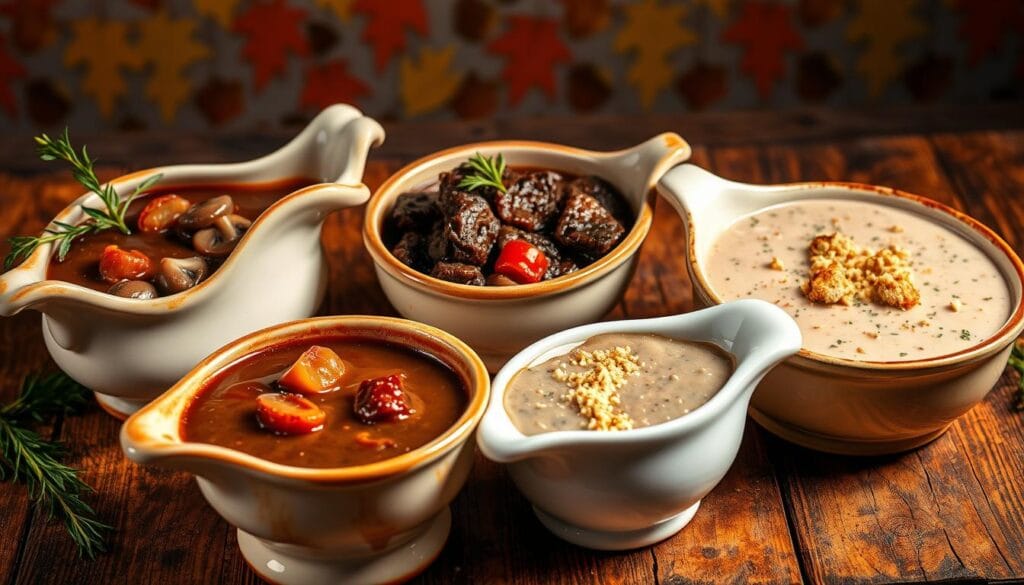
Looking to elevate your Turkey Gravy Without Drippings? Small additions and flavorful ingredients can turn a basic gravy into a crowd-pleasing sauce.
Herbs are a great place to start. They can change your gravy’s taste in amazing ways:
- Thyme adds an earthy, subtle warmth
- Sage brings a classic, robust turkey-complementing taste
- Rosemary introduces a piney, aromatic note
But herbs are just the beginning. Here are some other ingredients to consider:
- Caramelized onions for deep, sweet undertones
- Sautéed mushrooms for an umami-rich dimension
- A splash of red or white wine to enhance complexity
- Roasted garlic for intense, mellow flavor
“The secret to an unforgettable gravy is not just in the technique, but in the unexpected flavor combinations you dare to explore.” – Professional Chef
Want to make your Turkey Gravy Without Drippings suitable for different diets? Add cream for a richer texture, swap in bone broth, or for vegetarians, use vegetable stock with nutritional yeast for extra flavor.
Storage and Make-Ahead Tips
Planning ahead can make your gravy prep easy. Make-ahead gravy is great for busy cooks. It lets you make this tasty sauce before your meal.
There are many ways to store gravy well. These methods keep the flavor and texture good. Knowing how to store it right can make your gravy last longer and taste better.
Refrigeration Guidelines
Keeping your gravy fresh and safe is important. Here’s what to do:
- Cool the gravy completely before storing
- Transfer to an airtight container
- Refrigerate within two hours of cooking
- Store in the refrigerator for up to 5 days
Freezing Methods for Long-Term Storage
Freezing your gravy is a smart move for saving time later. It’s a great way to store it for longer:
- Let gravy cool to room temperature
- Pour into freezer-safe containers
- Leave about 1/2 inch of space for expansion
- Freeze for up to 4-6 months
Reheating Instructions
To warm up your stored gravy, be gentle. This keeps it smooth:
- Thaw frozen gravy in the refrigerator overnight
- Reheat on low heat, stirring frequently
Stir in a little broth if the gravy is too thick.
- Whisk thoroughly to restore original texture
With these tips, you’ll always have a tasty gravy ready to enhance your meals.
Perfect Pairings and Serving Suggestions
Make your meal special with creative gravy pairings. Your homemade gravy can do more than just go with turkey. It can make many dishes taste amazing.
Classic serving gravy options include:
- Creamy mashed potatoes
- Roasted vegetables
- Open-faced sandwiches
- Savory meat dishes
Think about temperature and texture when pairing gravy. Warm gravy is best for flavor and texture. Serve it right away for the best taste.
Be creative with how you serve your gravy. Try it over:
- Crispy roasted chicken
- Hearty meat loaf
- Freshly baked biscuits
- Stuffing or dressing
Pro tip: Keep your gravy warm in a small saucepan or gravy boat. This keeps every bite tasty and inviting.
The secret to perfect gravy is not just in making it, but in serving it with imagination and flair.
Tips for Achieving Smooth, Lump-Free Gravy
Making smooth gravy can be tough, but with the right steps, you’ll get it right every time. The key is in how you prepare and mix it.
To avoid lumps, follow these important tips:
- Whisk constantly when adding liquid to your roux
- Pour liquid slowly and steadily
- Use room temperature ingredients
- Sift flour before mixing to break up potential clumps
Temperature control is key when making lump-free gravy. Start with a warm roux and add liquid slowly while whisking hard. Patience is your best tool in creating a silky smooth gravy.
“The difference between good and great gravy is in the technique.” – Professional Chef
If lumps show up, don’t worry. You have a few ways to fix it:
- Use a fine-mesh strainer to remove lumps
- Blend the gravy using an immersion blender
- Whisk aggressively to break down small lumps
Remember, the more you practice making Turkey Gravy Without Drippings, the smoother and more flavorful it will become. Each attempt builds your skill and confidence in the kitchen.
To add even more flavor to your turkey, check out these turkey injection marinade ideas that pair excellently with gravy for moist, juicy meat.
Conclusion
Making homemade turkey gravy without drippings is an art you can master. It’s not just about following old recipes. With practice, you can make a gravy that’s just as good as any traditional one.
The secret to great gravy without drippings is in the technique and creativity. You can use brown butter, toast flour, or add flavor enhancers. These skills let you turn simple ingredients into a tasty sauce. This way, you can always have a great gravy, even when you can’t use drippings. Cooking is about experimenting and discovering what you enjoy.
Feel free to adjust the techniques to suit your taste—turkey gravy without drippings gets better each time you make it. With practice, you’ll refine your skills and impress everyone with a smooth, flavorful homemade gravy.
Now, you have the tools to make gravy like a pro in your kitchen. Just remember to enjoy the journey and trust your taste. Your hard work will pay off with amazing gravy that everyone will love.
FAQ
Can I make gravy without turkey drippings?
What equipment do I need to make gravy without drippings?
How can I prevent lumps in my gravy?
Can I make gravy ahead of time?
What can I use instead of turkey broth?
How long can I store homemade gravy?
Can I make gravy without wheat flour?
What herbs work best in gravy?
How can I add more depth to my gravy?
Is it possible to make a vegetarian gravy?
Have You Tried Our Recipe Today?
i like it
i like it very weel